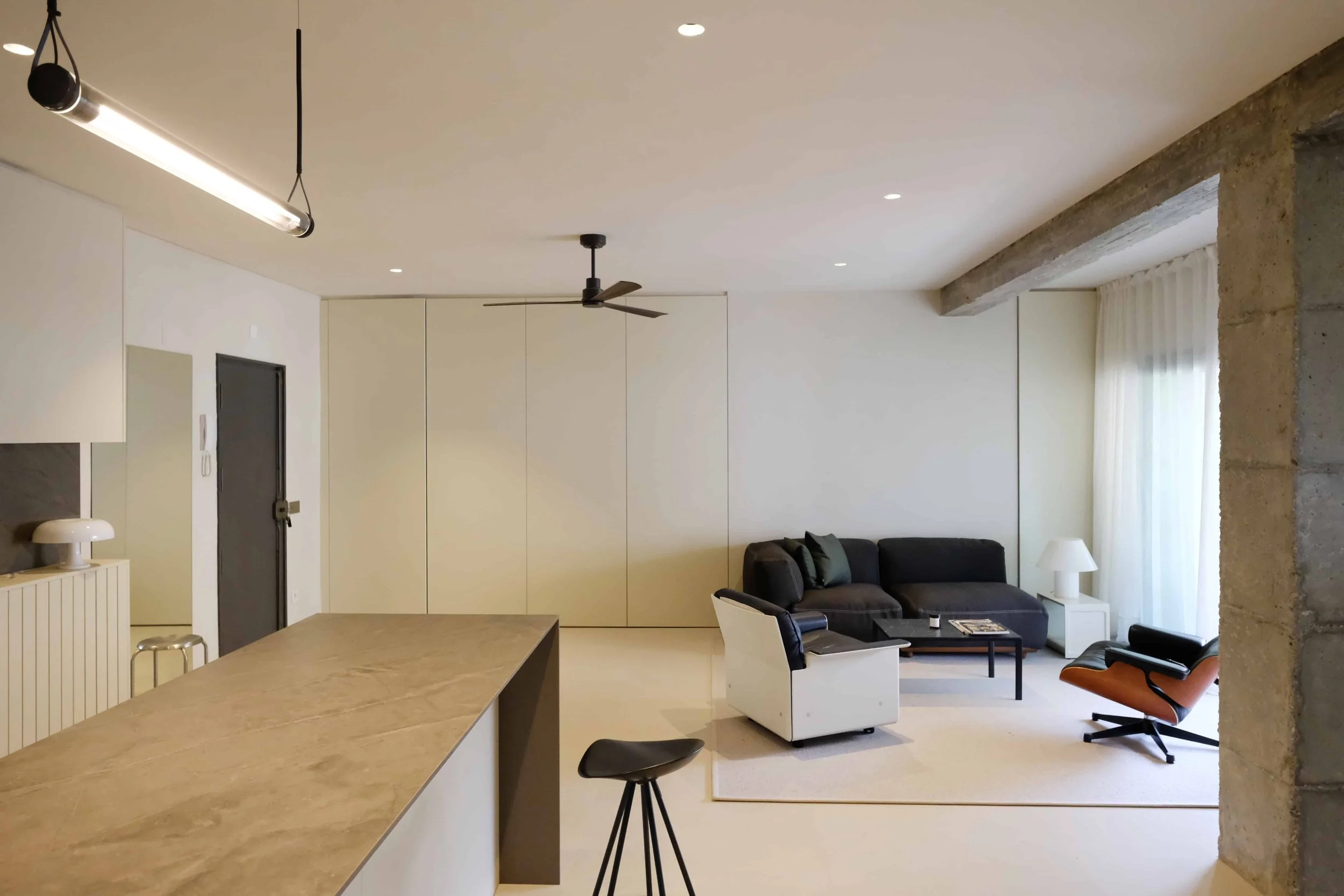
casa costa - a healthy interiors retrofit (barcelona)
Casa Costa is a 100m² residential retrofit in Sarrià–Sant Gervasi, Barcelona, delivered through a wellness-led approach to healthy materials, durability, thermal comfort, and locally anchored procurement.
project overview
Biofilico led this residential project from concept through detailed design, coordinating specification decisions across finishes, lighting, glazing, joinery and furniture—working closely with the construction team to protect design intent through delivery.
Location: Sarrià–Sant Gervasi, Barcelona
Size: 100m²
Biofilico role: Concept Design → Schematic + Detailed Design → Procurement-led specification strategy
Construction team: GBArq studio
Design team: Matt Morley (Lead), Dina Cheliadina (Concept Design), Denisse (Schematic + Detailed Design)
executive summary
TL;DR — Key takeaways
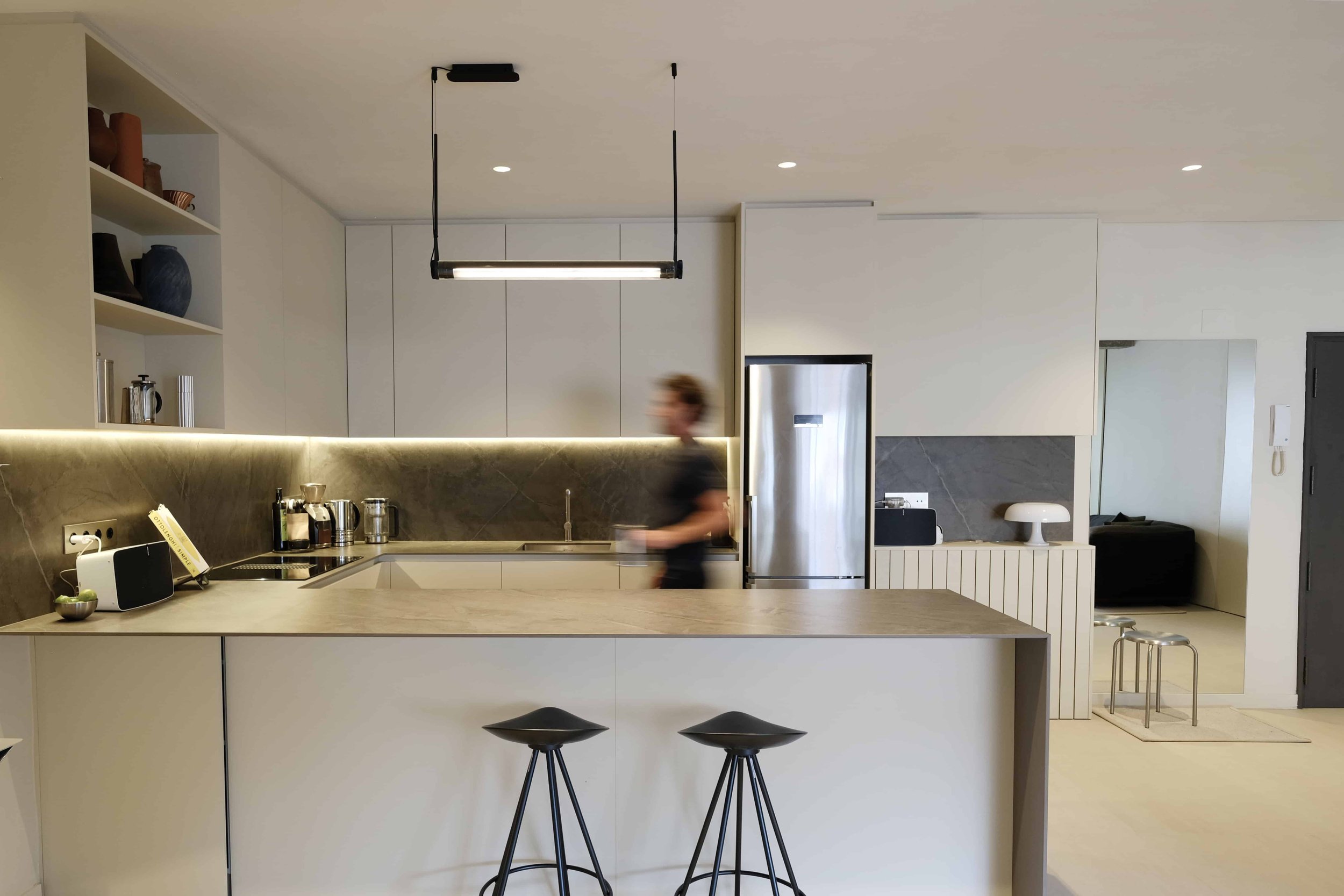
Healthy materials: eco-friendly lime paints by Formma (Barcelona) across walls (plus front door and terrace ceiling).
Thermal comfort uplift: new double glazing by K·Line (France) specified to improve day-to-day comfort and efficiency.
Durability-first surfaces: porcelain flooring Pavigres Granity / Air (Portugal) for longevity and low maintenance.
Wet-area discipline: robust detailing across bathrooms with Kerakoll grout strategy + bespoke glass/mirrors.
Local procurement as risk management: Barcelona-first where practical (UNICO, Estudio Utopia, La Cristalleria, Marset, FARO, etc.), supplemented by Iberian/EU partners when performance justified it.
the brief
our approach to the brief
The initial brief looked like this:
Healthy interiors: low-tox, low-emission decision-making where feasible
Durability + longevity: hard-wearing, low-maintenance selections
Thermal comfort uplift: upgraded glazing and improved envelope performance
Local procurement: Barcelona-first where practical, supported by Iberian and EU partners
our framework
a healthy interiors framework
Casa Costa followed Biofilico’s “healthy interiors framework”: a principle-led process where specification is treated as a design tool—not an afterthought.
Key themes included:
mineral-based finishes and an eco-aligned grout/sealant strategy
performance upgrades with tangible comfort impact (glazing)
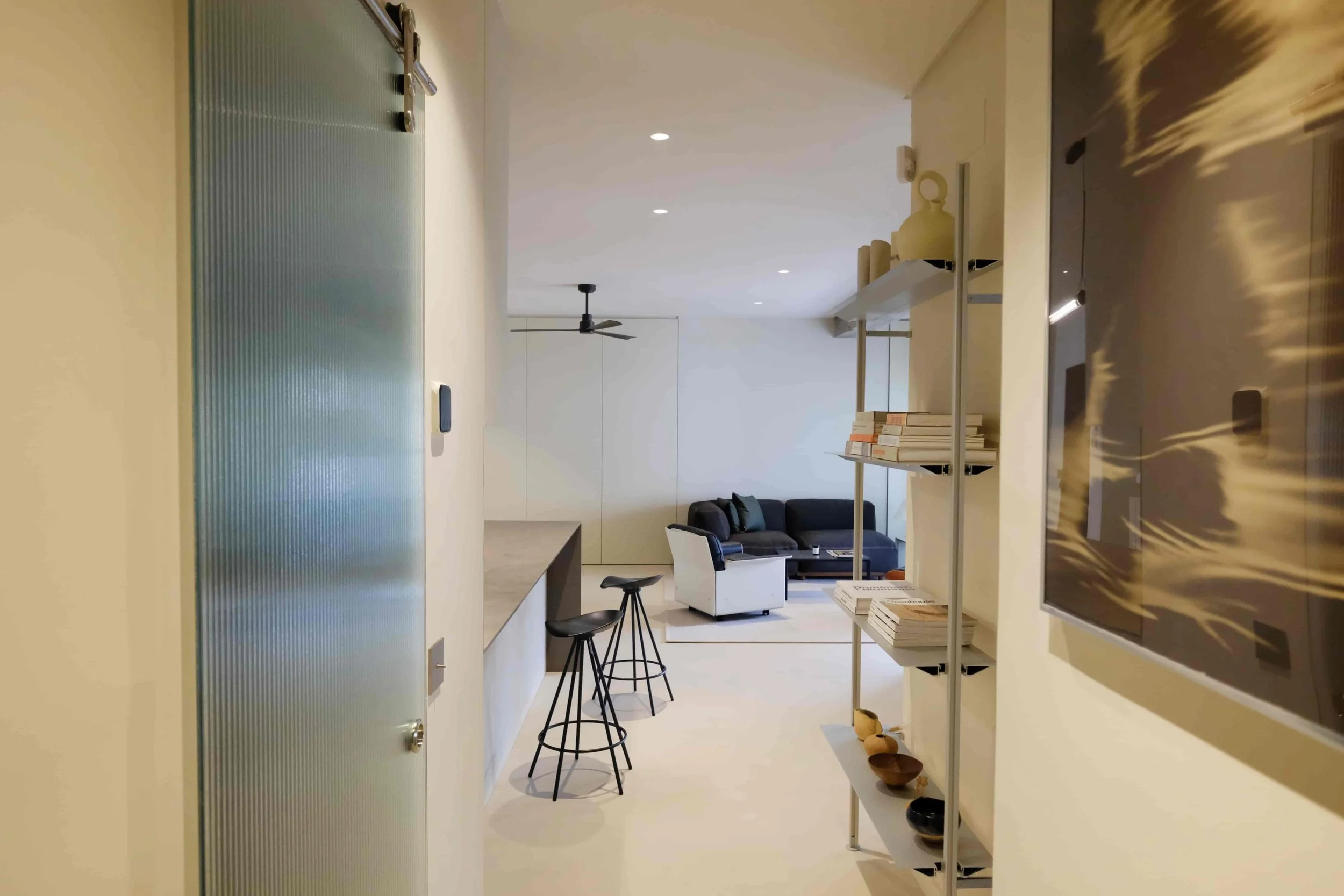
a calm palette built from ceramics, metal, linen and timber
local fabrication for joinery and glazing where possible
buildability and on-site clarity via a structured drawing package (controlled demolition guidance, waste segregation intent, low-VOC notes, and coordinated electrical/ceiling layouts)
key design decisions
Low-tox wall finish strategy
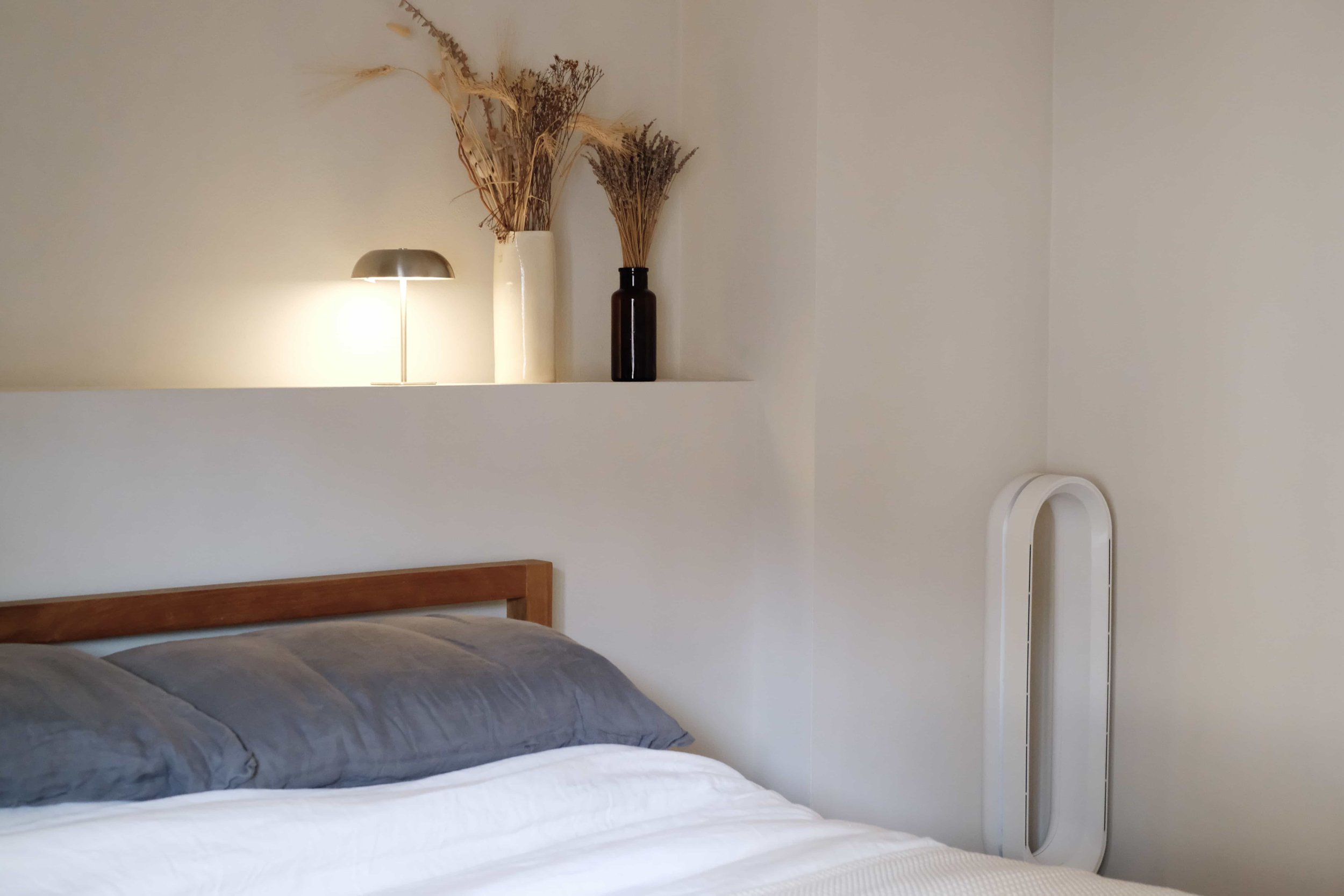
All walls were finished in eco-friendly lime paints by Formma (Barcelona), supporting a breathable, mineral-based approach. Formma paints were also used for the front door (grey) and terrace ceiling (pine green).
Hardware and electrical consistency
Bathroom taps, showerheads, custom-size sinks, accessories, shower tray, switches and sockets (brushed nickel effect), and brushed steel door handles were supplied via UNICO (Barcelona) (including selected partner products such as D-Line for some ironmongery).
Kitchen: performance surfaces and coherent detailing
The kitchen surface strategy combined durability and restraint:
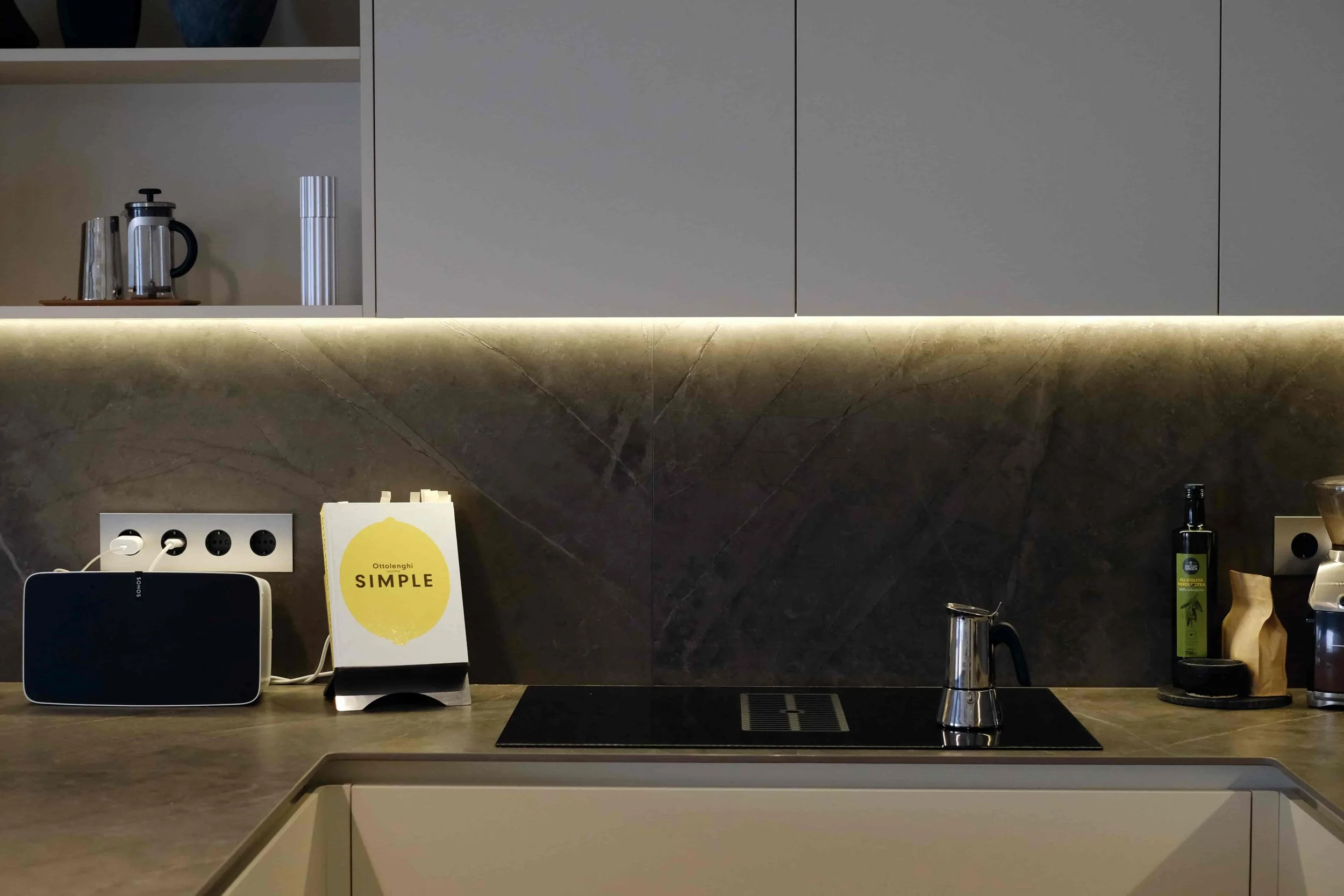
Cosentino Dekton – Kira countertop
Foster (Italy) appliances and fixtures (oven, sink, tap, convection plate, extractor), distributed via UNICO
Responsible procurement layer: furniture and soft finishes
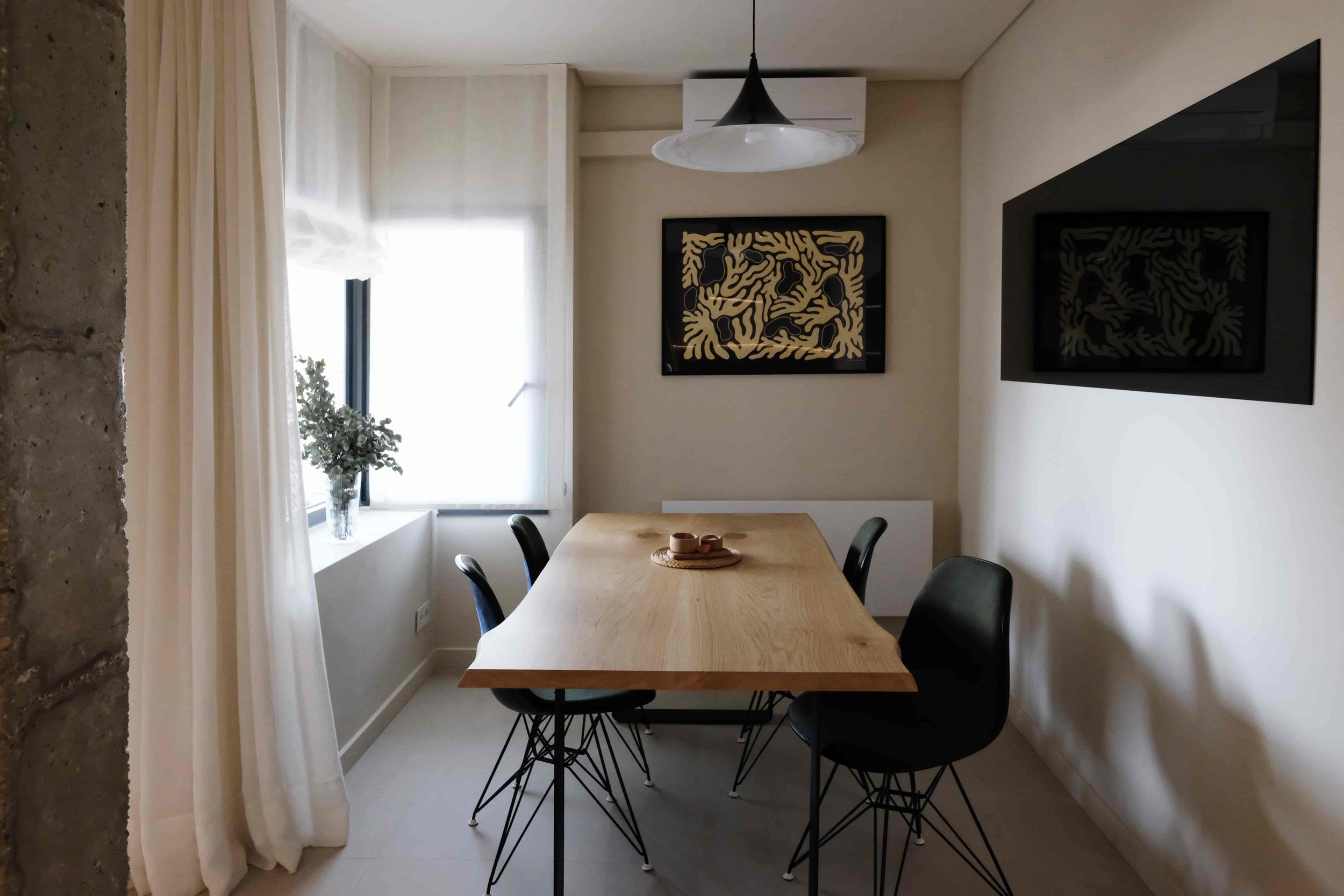
dining table handmade locally by Mas Fuster (Barcelona) using French oak sourced from the Pyrenees
custom NILO modular sofa by Andreu World (Valencia) in Raglan sustainable fabric
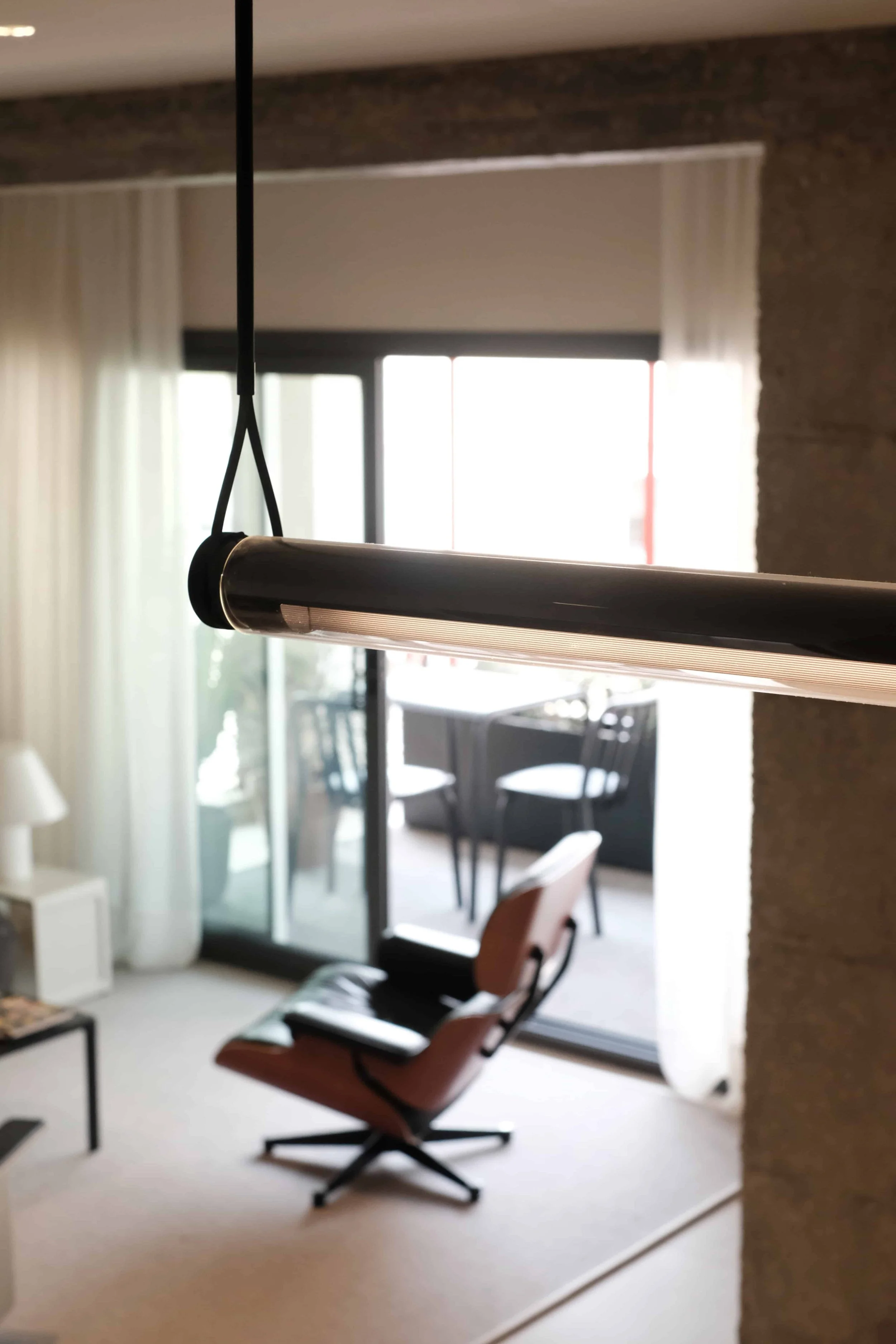
Vitra Eames chairs with custom green cushions and recycled plastic base
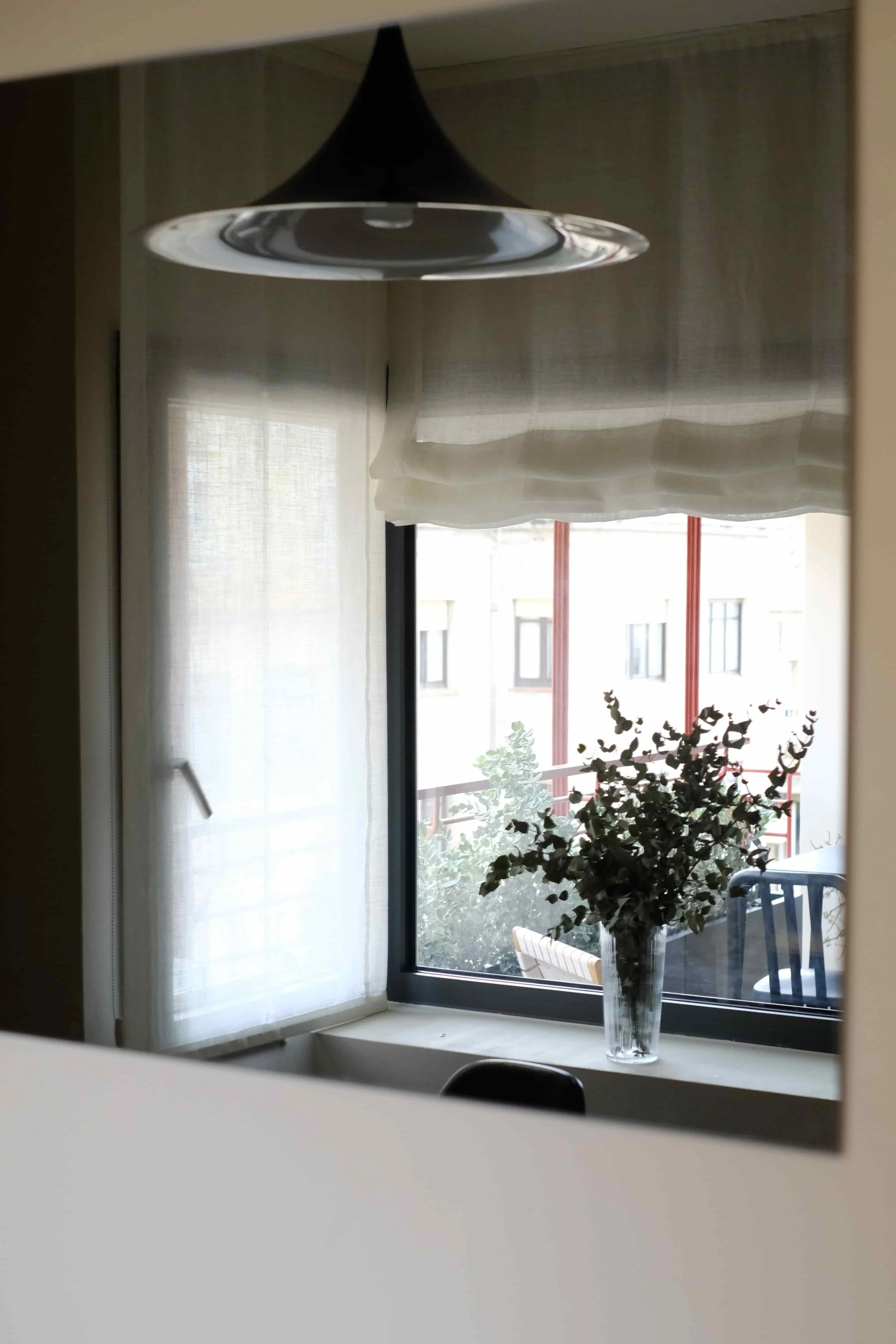
natural linen curtains made to order by La Maison (Barcelona)
custom rugs by Cotlin (Barcelona) (kitchen, living, office, terrace)
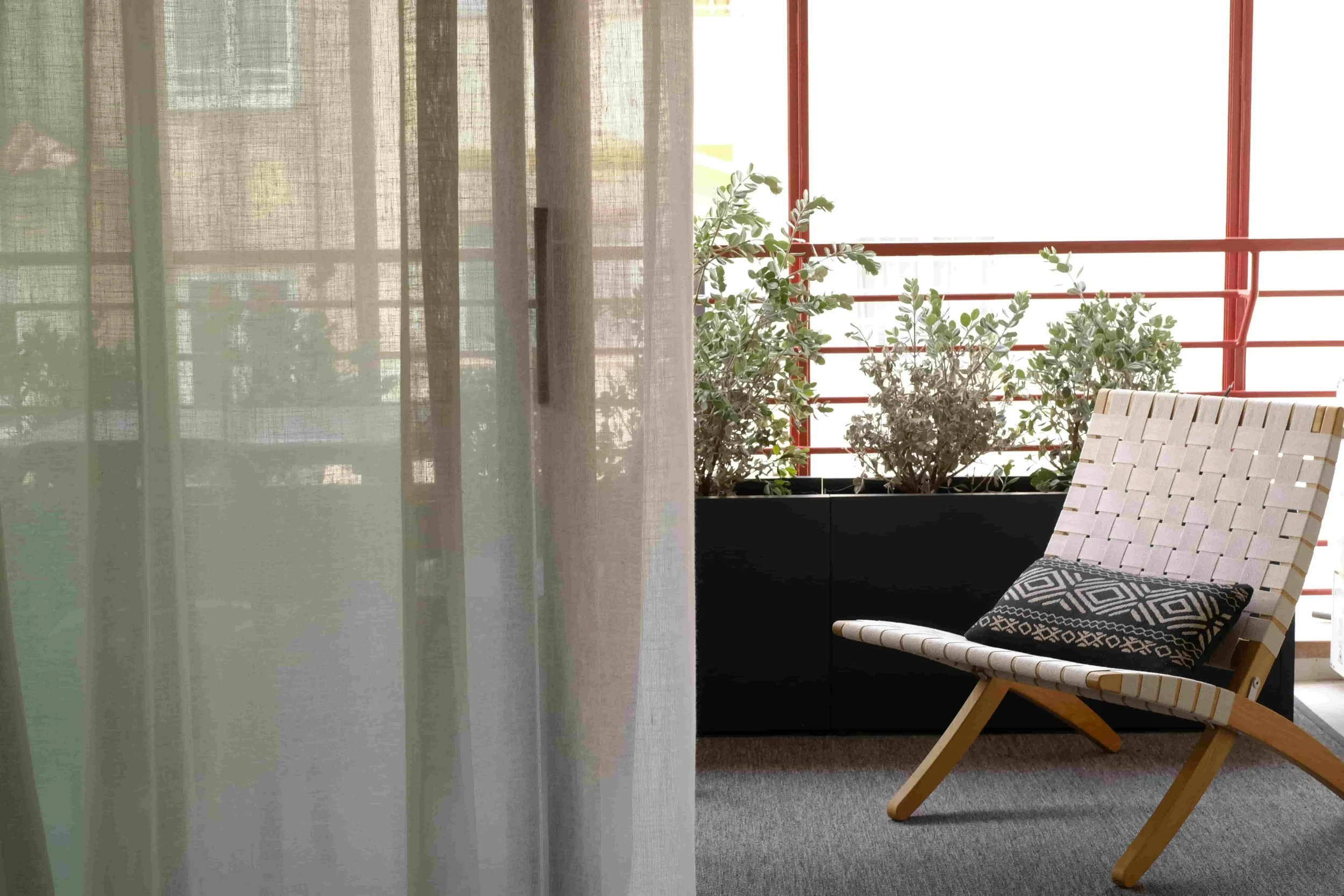
terrace planters by Herstera (Barcelona) in anthracite grey metal
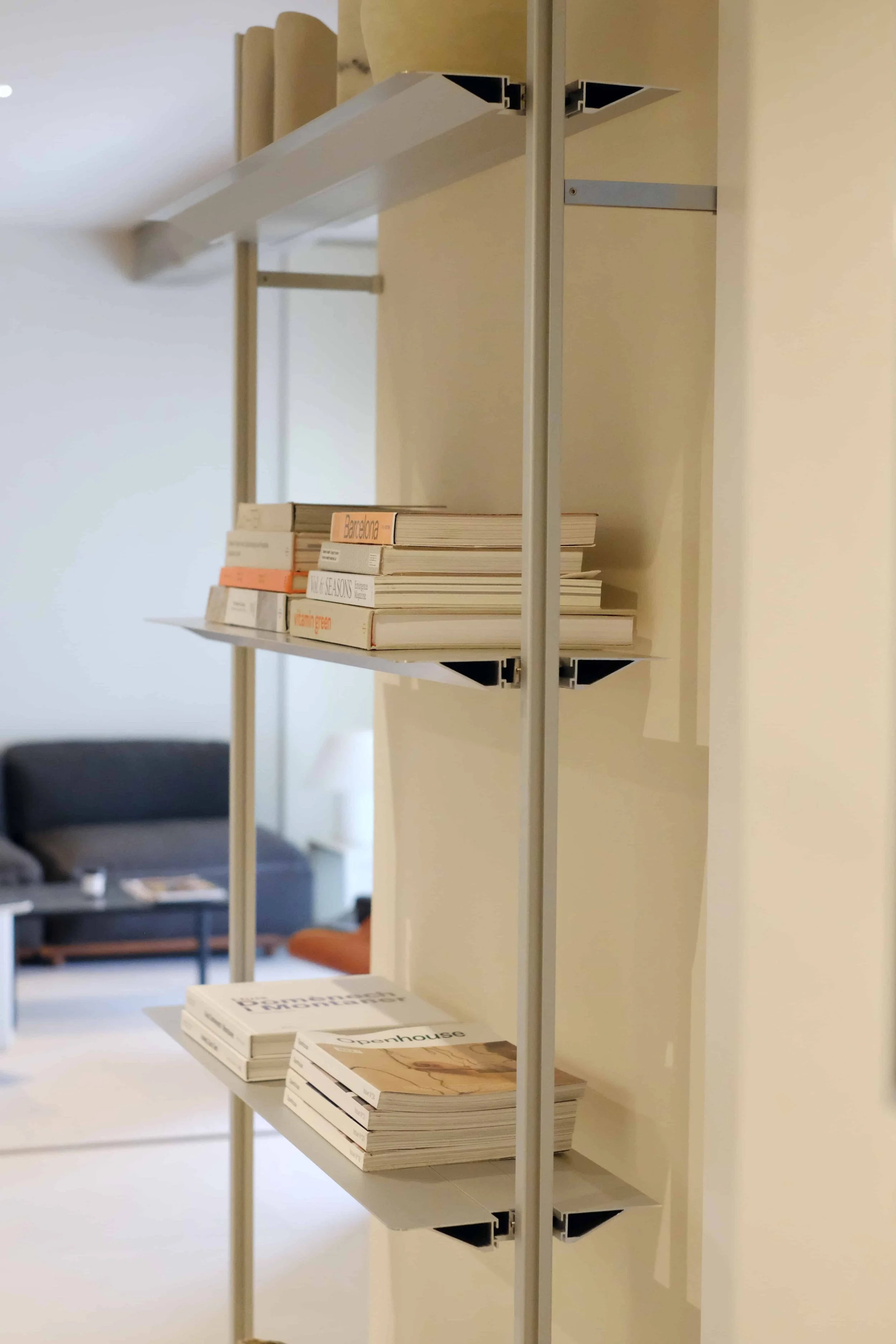
aluminium shelving and Jamaica stools by BD Barcelona
design for comfort & performance
Thermal comfort upgrade
All windows were replaced with new double glazing by K·Line (France), specified with high-grade aluminium frames in brushed anthracite grey to improve thermal efficiency and comfort.
Durable flooring palette
Ceramic flooring tiles by Pavigres (Portugal) were specified in two tones (matte beige and hammered grey). Product family: Granity / Air—selected for performance, longevity and low-maintenance operation.
Kitchen: performance surfaces and coherent detailing
The kitchen surface strategy combined durability and restraint:
Cosentino Dekton – Kira countertop
Foster (Italy) appliances and fixtures (oven, sink, tap, convection plate, extractor), distributed via iconico
Ergonomics as a wellness detail
The home office includes an electric sit-stand desk by Humanscale, supporting an ergonomics-led work setting.
Bathrooms designed for longevity
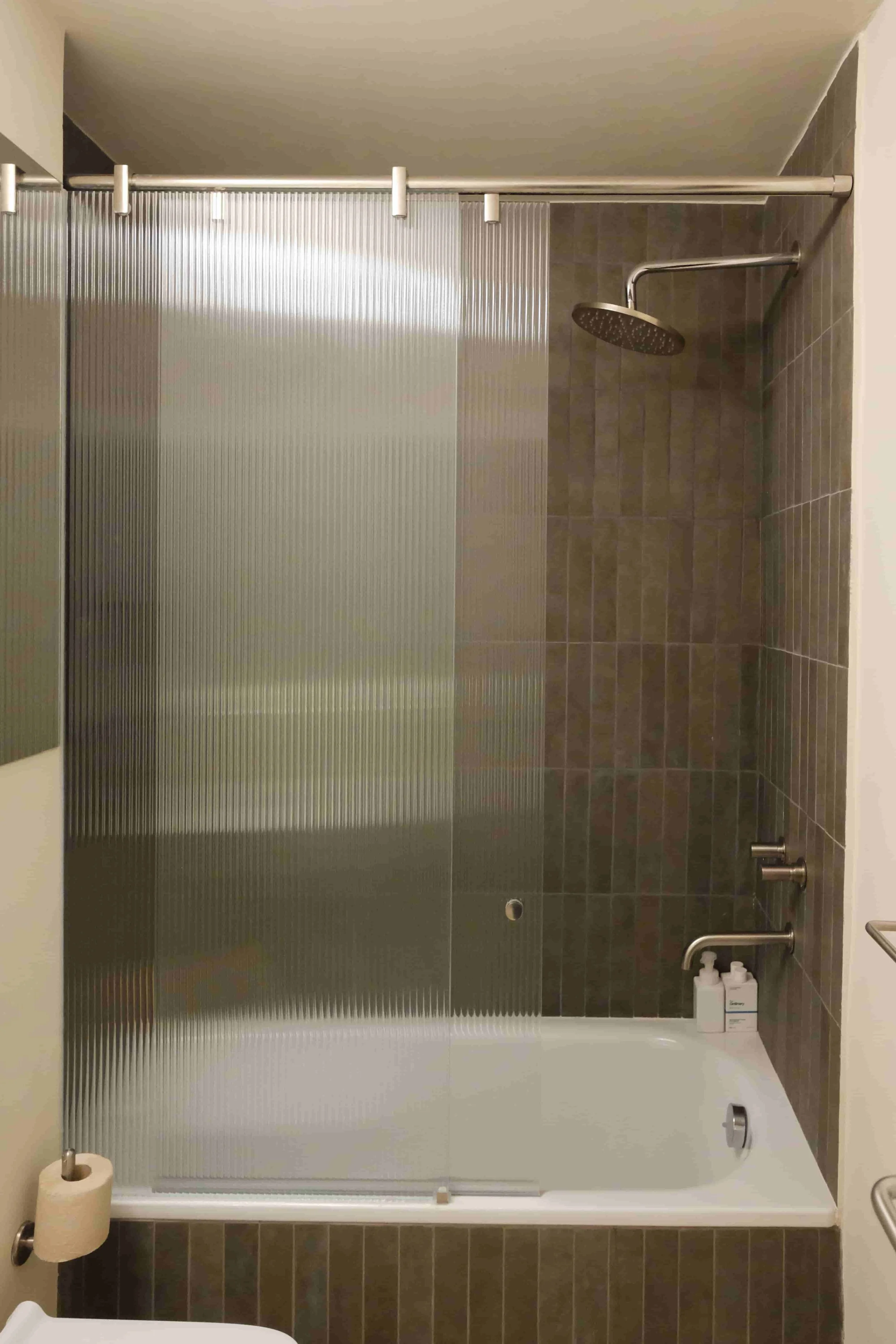
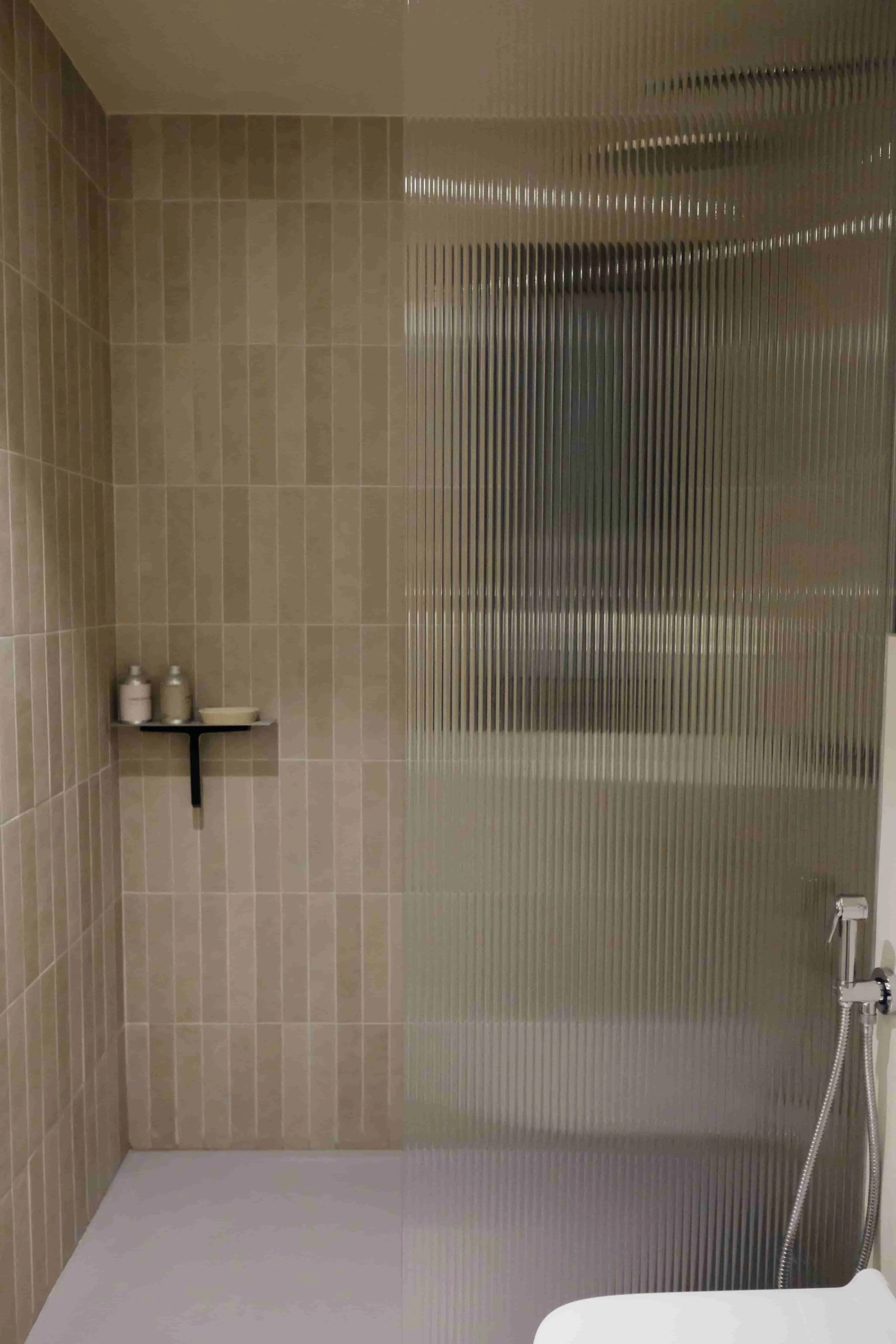
Bathroom wall tiles were specified from Stages (Equipe collection, Spain). Grout strategy across flooring and wet areas used Kerakoll. Custom fluted glass doors and mirrors were made to order by La Cristalleria Barcelona, enabling consistent detailing and long-term serviceability.
Lighting as comfort infrastructure
Lighting was treated as part of the wellness strategy (glare control, warmth, layered ambience), combining:
Marset (Barcelona): kitchen pendant, terrace light (Pfaff), office wall lights, bathroom mirror light (Manhattan)
Santa & Cole (Barcelona): bedroom standing lamp + home office desk lamp (Miguel Milá designs)
FARO (Barcelona): ceiling fans + ceiling spotlights
frequently asked questions
FAQ
-
A healthy interiors retrofit prioritises material choices, detailing, comfort outcomes, and maintenance logic that support better day-to-day wellbeing—beyond purely aesthetic design decisions.
-
Typically: large surface finishes (walls/floors), thermal comfort upgrades (glazing/envelope), wet-area detailing discipline, and lighting strategy (glare control + layered ambience).
-
Local procurement can improve accountability, shorten feedback loops, reduce lead-time uncertainty, and simplify replacements or defects management—especially important for multi-unit residential and hospitality operations.
-
Not necessarily. Some decisions reduce lifecycle costs by extending replacement cycles and simplifying maintenance. Where budget constraints exist, credibility comes from managing trade-offs intentionally through detailing and specification discipline.
-
The same framework applies: prioritise high-impact surfaces, thermal comfort, durability, wet-area risk management, and procurement clarity—then tailor the design expression and operational requirements to the asset type.
If you are planning a residential retrofit, hospitality refurbishment, or workplace upgrade and want a materially disciplined approach to healthy interiors, durable specification, and local procurement strategy, contact Biofilico to discuss how this framework can be adapted to your project constraints.