The Expanding Amenity Mix of the Social Wellness Club
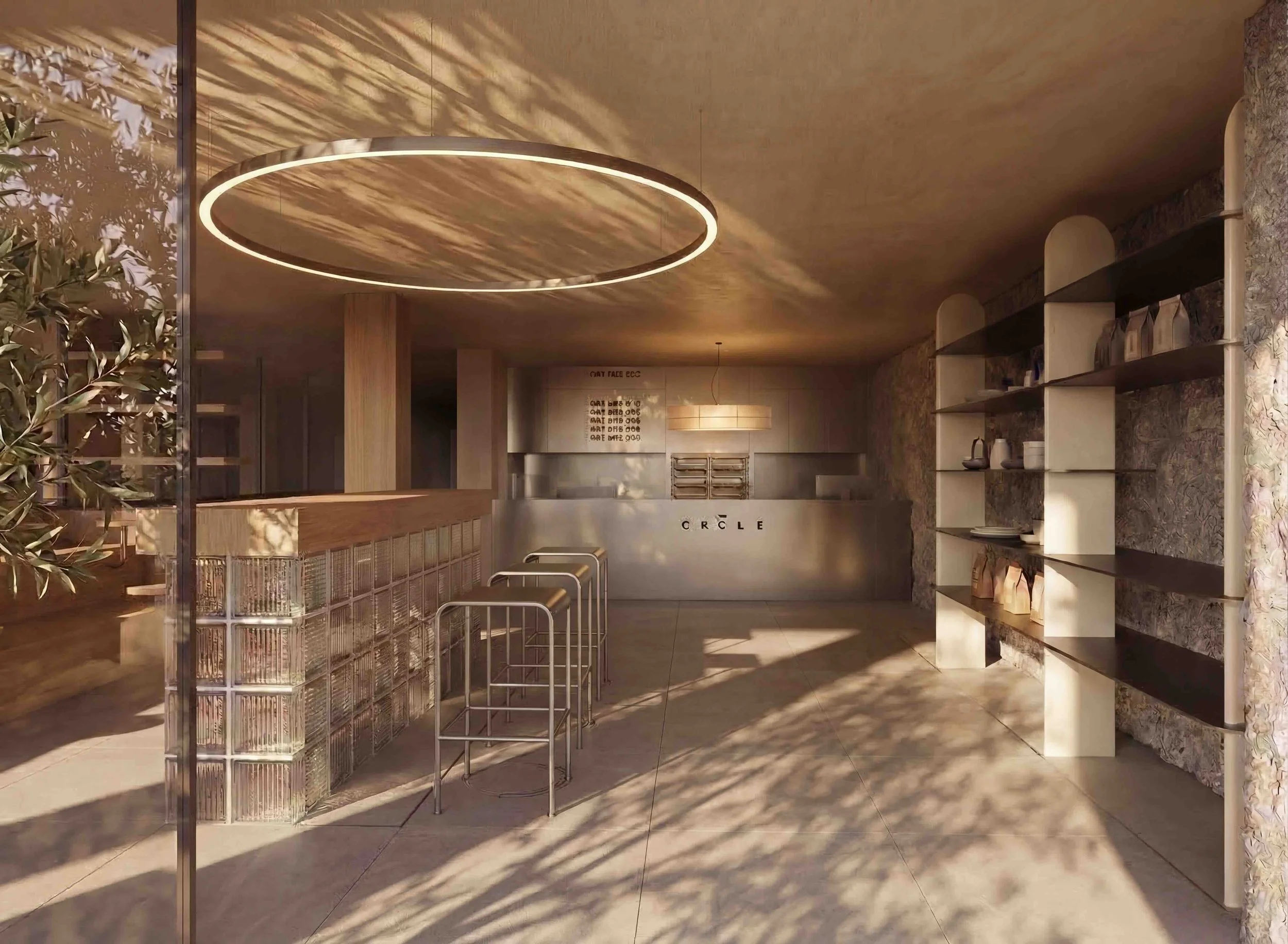
our reception design for CRCLE wellness club, marbella, spain
from our position on the frontline of design briefs from hotels and entrepreneurs, it is now clear The wellness club is evolving.
Not long ago, most wellness-led memberships could be grouped into relatively simple categories. There were gyms focused on exercise, spas focused on relaxation, and boutique studios built around classes such as yoga, Pilates or cycling.
More recently, there has been a rise in recovery-led and biohacking concepts centred on cold plunge, sauna, red light therapy and compression.
Now, a more layered model is taking shape: the social wellness club.
This is not simply a gym with a café added on, nor a spa with a few weights nearby. At its best, the social wellness club brings together fitness, recovery, food and beverage, coworking, community and culture within one coherent membership environment. It is designed not only for workouts or treatments, but for longer dwell time and more varied use throughout the day.
For developers, hospitality operators and founders entering this category, the amenity mix is expanding, and the design challenge is becoming more complex.
From Single-Use Wellness to Multi-Layered Member Environments
The most interesting wellness concepts today are moving away from single-use thinking.
A member may arrive for strength training in the morning, use a sauna and plunge afterwards, stay for a coffee, answer emails for an hour, have lunch, and return later in the week for a talk, listening session or social gathering. The club is no longer defined only by the equipment or therapies it contains. It is defined by how successfully it supports a full rhythm of use. This changes the planning logic significantly from our design consultant perspective.
When a club is built around one main activity, the design brief is relatively straightforward. Once the same environment needs to support some combination of physical performance, mental and physical recovery, nourishment, focused work, social interaction and community programming, the project becomes closer to a hospitality-led members’ club than a traditional gym.
That is what makes the social wellness club such an interesting typology. It sits at the intersection of wellness, hospitality, interior design and to a certain extent even placemaking.
What Amenities Are found in the latest Social Wellness Clubs?
1. Strength and Functional Training Remain Foundational
Despite the category’s expansion from its original roots, physical training still matters. In most successful concepts, strength training and functional movement remain central to the offer.
What is changing is the way these spaces are integrated into a broader environment. The gym floor no longer has to do all the commercial heavy lifting alone. It becomes one part of a wider member journey rather than the sole reason to visit.
This often leads to more selective, better-zoned fitness environments rather than simply larger ones.
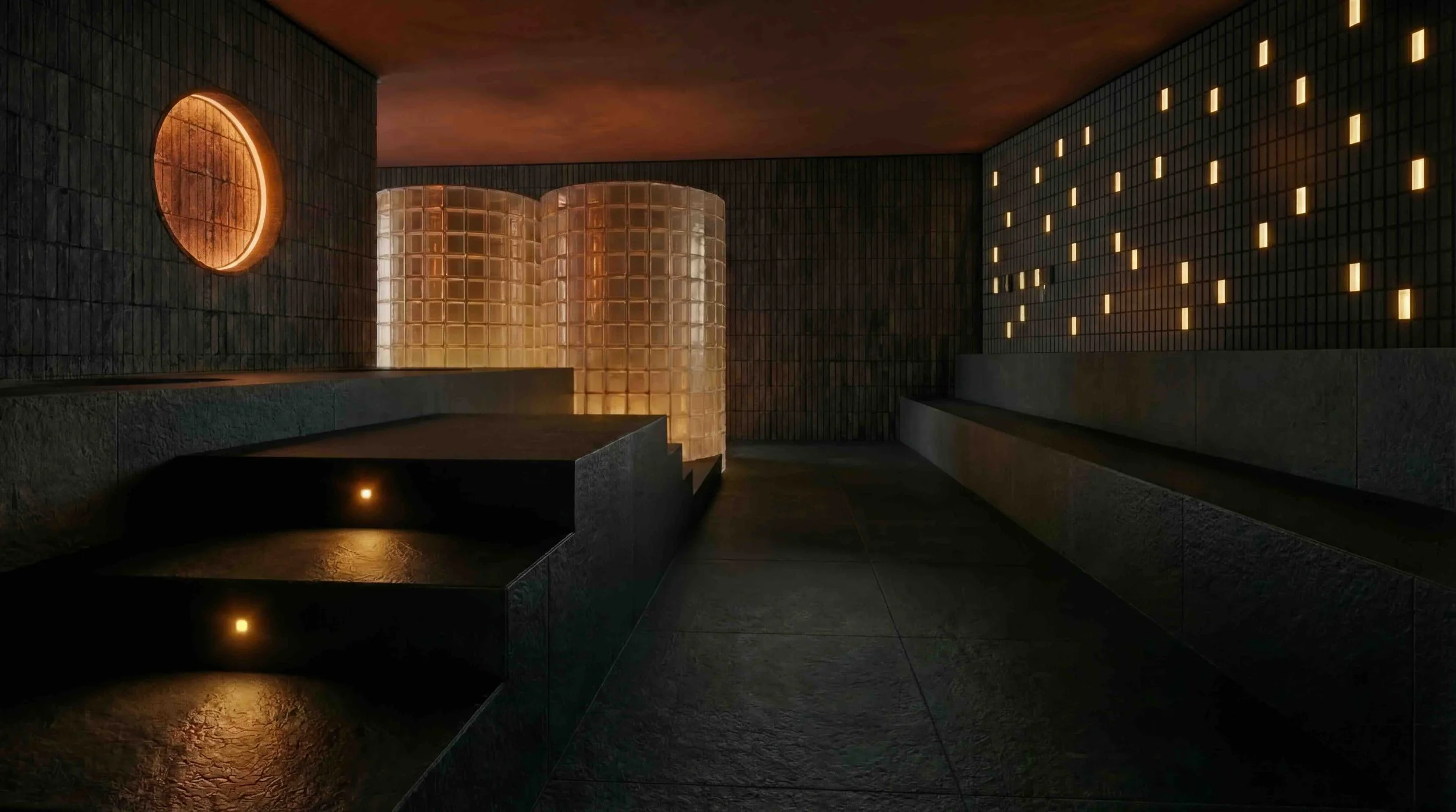
our functional spa design for CRCLE wellness club, marbella, spain
2. Recovery Is Becoming a Daily-Use Amenity
Sauna, cold plunge, red light therapy, compression, mobility zones and other recovery tools are increasingly being treated as part of weekly or even daily use rather than specialist extras. This is one of the biggest changes in the market.
Recovery is no longer reserved for elite athletes or destination spas. It is becoming a core expectation in premium wellness environments, particularly where the operator wants to increase dwell time and create more reasons for members to return frequently.
The design implication is clear: recovery can no longer feel like an afterthought. It needs careful planning around acoustics, wet and dry adjacencies, drainage, ventilation, thermal transitions, privacy and atmosphere.
3. Food and Beverage Is Moving from Support Function to Brand Anchor
In many social wellness clubs, the café is not just there to sell smoothies or protein shakes. It is becoming one of the defining elements of the concept. This matters for two reasons.
First, it supports longer dwell times. Second, it changes the front door of the brand. A public-facing café can act as both a neighbourhood touchpoint and a softer entry into membership.
For some concepts, the café becomes the threshold between public and private, creating a more hospitality-led arrival experience than the traditional reception desk and turnstile model.
Additionally, the ‘health bar’ menu is evolving with advances in nutritional supplements such as high quality creatine, natural nootropics, functional mushrooms and collagen, alongside vegan proteins, now pushing the barriers of a functional drinks menu.
4. Coworking and Quiet Lounge Space Are Entering the Category
One of the clearest signs that this sector is evolving is the growing presence of coworking, reading, library and lounge-style spaces within wellness-led clubs.
This is not about turning a club into an office. It is about recognising that many members want to stay beyond the workout itself. A quiet mezzanine, shared table, reading room, laptop-friendly lounge or library corner can extend the usefulness of the club and support a more all-day relationship with the space.
From a design perspective, these spaces must feel calm and productive without tipping into conventional corporate workspace language. The best examples feel more like hospitality lounges or members’ clubs than offices.
5. Listening Rooms, Events and Community Programming Are Broadening the Offer
Another sign of maturity in the sector is the inclusion of spaces for programming that are not strictly fitness or recovery focused.
This may include:
listening lounges
talks and workshops
run club gathering points
book clubs
informal performances
community dinners
educational wellness events
These functions strengthen the club’s social identity. They also create more reasons to visit at off-peak times and more opportunities for the operator to build culture around the space.
Not every club needs a dedicated event room, but more concepts are now considering how one area might flex between lounge use and programmed use.
Why the Amenity Mix Matters Commercially
As the amenity mix expands, the success of the project depends less on the presence of individual functions and more on how they work together.
A social wellness club struggles when it feels like unrelated ideas assembled under one roof. A gym here, a plunge there, a café in the corner, a coworking table somewhere upstairs. That kind of additive thinking creates operational friction and weakens the member experience.
The better projects are more integrated. They are designed around sequence, rhythm and atmosphere.
Questions that matter include:
How does the member arrive?
Does the transition from training to recovery feel natural?
Is there a clear shift in mood between active and social zones?
Does the café function both operationally and atmospherically?
Can people work quietly without undermining the social energy of the club?
Are the highest-value spaces positioned where natural light, volume or views can do the most work?
Does the environment encourage members to stay longer without forcing that behaviour?
These are design questions, but they are also commercial ones.
Why Hospitality Thinking Is Increasingly Important
As this category evolves, hospitality principles become more important.
That does not necessarily mean high-touch service or a luxury-hotel approach. In fact, many of the most interesting concepts are intentionally less performative. But they are still hospitality-led in the way they think about comfort, mood, flow, dwell time and environment.
A successful social wellness club should hold people well. It should feel easy to inhabit. That is what allows the model to work.
This is where materiality, acoustics, lighting, planting, furniture scale, signage and spatial hierarchy become critical. A good social wellness club is not simply a collection of amenities. It is an environment that makes healthy routines feel more natural and more desirable.
Designing the Next Generation of Wellness Clubs
For developers and founders, the lesson is clear: the modern wellness club is becoming more hybrid.
The opportunity is exciting, but it also requires discipline. Not every project needs every amenity. The right mix depends on brand positioning, target member, site context, local market and budget. The challenge is to identify which functions genuinely support the concept, and then to integrate them into a coherent member experience.
At Biofilico, this is where we see the greatest value being created: in the early planning and design stages, when fitness, recovery, food, work and social life can be shaped into a single, well-resolved environment rather than a series of disconnected add-ons.
The social wellness club is still evolving. But one thing is already clear: the future of the category lies not only in what amenities are included, but in how intelligently they are brought together.
Frequently Asked Questions
What is a social wellness club?
A social wellness club is a membership-based environment that combines multiple wellness and lifestyle functions within one coherent space. Rather than focusing only on exercise or spa treatments, it may bring together fitness, recovery, food and beverage, lounge space, coworking and community programming.
How is a social wellness club different from a traditional gym?
A traditional gym is usually centred on exercise equipment, classes and changing facilities. A social wellness club typically offers a broader experience, with recovery amenities, café or lounge areas, spaces for work or reading, and a stronger hospitality layer designed to encourage longer dwell time.
What amenities are commonly included in a social wellness club?
Common amenities may include:
strength and functional training zones
sauna and cold plunge
red light or compression therapy
café or healthy food and beverage offer
coworking or quiet lounge areas
social lounges
event or workshop space
listening rooms or cultural programming spaces
The exact mix depends on the operator’s concept, target audience and budget.
Why are cafés and social spaces becoming more common in wellness clubs?
Cafés and social areas support longer visits, increase dwell time and help create a stronger sense of community. They also allow the club to function more like a members’ environment rather than a single-purpose fitness facility.
Why is coworking appearing in some wellness clubs?
Coworking and quiet lounge spaces reflect a broader shift towards all-day lifestyle environments. Many members want to train, recover, eat and then stay for a while, whether to read, work, meet someone or simply enjoy the atmosphere.
What makes a social wellness club successful?
The most successful clubs are not defined by the number of amenities they include, but by how well those amenities are integrated. Good planning, clear zoning, strong atmosphere, smooth member flow and a coherent brand position matter more than adding more and more functions.
What are the key design challenges in a social wellness club?
The main challenges usually include:
balancing active and quiet zones
integrating wet and dry areas correctly
managing acoustics between social and recovery spaces
creating a smooth sequence from arrival to training, recovery and lounge use
making coworking or reading areas feel calm without becoming overly corporate
ensuring the club feels cohesive rather than fragmented
Do all wellness clubs need the same amenity mix?
No. The right amenity mix depends on the market, member profile, price point, building constraints and brand positioning. A successful concept is usually built around the right combination of uses rather than the maximum number of amenities.
Planning a social wellness club, wellness amenity or hospitality-led healthy space?
Biofilico supports real estate developers, hotel groups and club operators with concept development, spatial planning and wellness-led interior design for projects where fitness, recovery, food, work and social life need to come together within one coherent environment.