Hotel Wellness Design Beyond the Spa: How Interiors Shape Guest Wellbeing
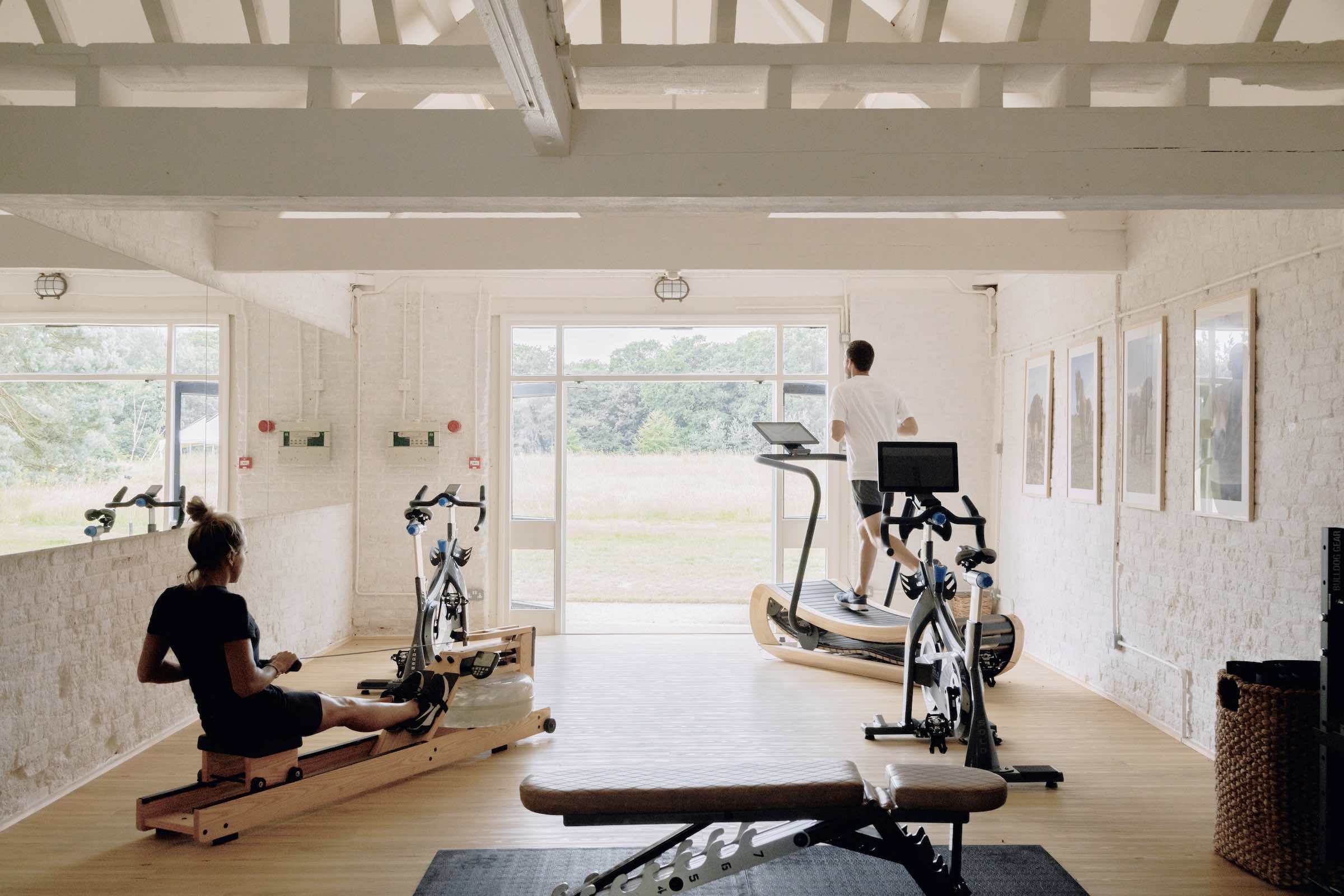
fritton lake hotel members club uk - our gym design
In hospitality, wellness is still too often treated as a self-contained department. A hotel may have a spa, a gym, a treatment menu and perhaps a few wellness-branded experiences, while the rest of the property remains relatively conventional in how it feels and functions.
That approach is increasingly outdated. In fact, we deliver all of that under our Biofit name, whereas with Biofilico we aim to go further into the DNA of a project, looking for tangible physical, mental and social health benefits outside of dedicated wellness facilities on site.
We believe this is already reflected in the guest experience anyway - Guests do not experience wellness only when they enter the spa, gym or yoga room. They can potentially experience it across the entire journey: on arrival, in the guestroom, in the bathroom, in the corridors, in the lounge, at breakfast, in movement spaces and in the overall emotional tone of the property. If the spa is excellent but the bedroom is poorly lit, acoustically uncomfortable or visually overstimulating, the wellness promise starts to break down. The same applies to the restaurant food and drinks menu, the off-site excursion offer and so on.
This is why hotel wellness design needs to go beyond amenity planning and extend into the wider interior experience. For hotel owners, developers and operators, the opportunity is not simply to add more wellness facilities. It is to create a more coherent, restorative and differentiated hospitality offer through healthier, better considered environments.
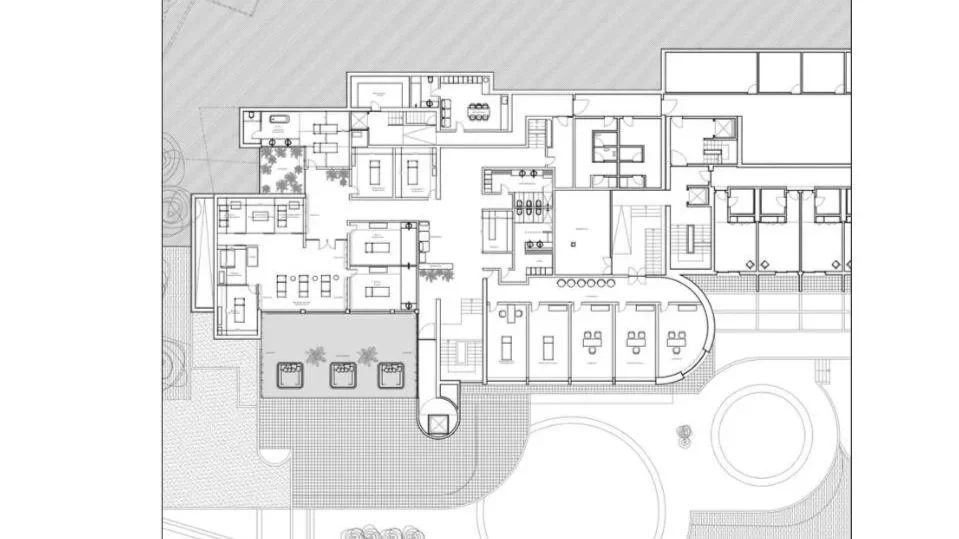
space planning wellness amenities outside of the main spa, pool and gym - for hotel sao felix in portugal
Wellness in Hotels Is About More Than the Spa
Spas remain an important part of hospitality wellness. In some properties they are a major driver of revenue, brand positioning and guest appeal. But the spa should not carry the entire wellbeing narrative on its own.
A serious approach to hotel wellness design looks at the whole property and asks broader questions:
Does the arrival experience feel calm, clear and welcoming?
Do guestrooms support good sleep, comfort and recovery?
Are lighting levels appropriate to mood and time of day?
Are acoustics managed well enough to reduce stress and disturbance?
Do the materials and finishes feel healthy, tactile and reassuring?
Are movement, recovery and relaxation integrated naturally into the offer?
Do public spaces help guests slow down, connect and reset?
This broader lens is what separates a hotel that merely offers wellness amenities from one that is genuinely designed around guest wellbeing.
Why Hotel Wellness Design Matters Now
There are several reasons this matters more than ever.
First, guest expectations have changed. Wellness is now a more mainstream consideration in travel, but guests do not always define it in technical terms. They may not ask explicitly about acoustics, circadian lighting or low-toxicity materials. However, they notice when a room feels restful, when the air feels fresh, when the bathroom feels calming, when shared spaces feel comfortable, and when the property as a whole supports relaxation rather than friction.
Second, hospitality operators are under pressure to differentiate. Many hotels now offer gyms, spas and some version of a wellness package. Those features alone are no longer enough to stand out. A more integrated wellness design strategy can create a stronger sense of quality and a more distinctive guest experience.
Third, the concept of wellness in hospitality is broadening. It now overlaps with sleep quality, recovery, movement, healthy food, mental reset, digital balance and a desire for more thoughtful, human-centred environments. Interior design has a major role to play in all of that.
The Common Mistake: Isolating Wellness Instead of Embedding It
One of the most common mistakes in hotel design is to isolate wellness into a few obvious spaces. The spa may be beautifully designed, but the rest of the hotel does not carry the same level of care.
This often happens because wellness is approached as a programme rather than a design principle. A hotel team decides to include a gym, treatment rooms or thermal facilities, but the wider design brief does not fully address what wellbeing should mean in the guestrooms, public areas or back-of-house planning.
The result can feel fragmented. Wellness becomes an add-on rather than part of the hotel’s identity.
A more successful approach embeds wellbeing into the full guest journey. That does not mean every property needs to become a medicalised longevity retreat or a highly specialised wellness resort. It means the hotel should consider how its interiors support rest, comfort, recovery and emotional ease throughout the experience.
to do this, we leverage concepts from the world of healthy buildings, informed by the IWBI WELL building standard in particular, to ensure we recommend evidence-based improvements designed to enhance brand image, drive incremental revenue for the hotel, and upgrade the guest wellness experience.
Key Elements of Hotel Wellness Design
1. Guestrooms That Support Rest and Recovery
The guestroom is the most important wellness space in the hotel, even if it is not always described that way.
This is where guests sleep, decompress, work privately, recover from travel and spend time away from social settings. If the room does not support comfort and recovery, the broader wellness story is weakened.
Wellness-focused guestroom design may include:
calming, well-balanced lighting
strong acoustic separation
comfortable and intuitive layouts
healthier materials and finishes
quality blackout conditions
thermal comfort
uncluttered visual design
bathrooms that feel restorative rather than purely functional
Many hotels still invest heavily in public-facing wellness areas while underestimating the wellbeing value of the room itself. That is often a mistake.
2. Lighting That Shapes Mood and Sleep Quality
Lighting has a major impact on how a hotel feels. It influences mood, relaxation, first impressions, usability and rest.
Poor lighting can make even an expensive property feel cold, flat or tiring. Overly bright bathrooms, harsh bedside lighting, weak task lighting or generic public area illumination all undermine the guest experience.
A better approach considers both atmosphere and function. In hospitality, lighting should support welcome, intimacy, ease of use and the gradual transition from activity to rest. In guestrooms especially, this has a direct bearing on perceived comfort and sleep quality.
3. Acoustics as a Core Part of Guest Experience
Acoustic comfort is one of the clearest yet most underestimated determinants of hotel quality.
Noise transfer between rooms, corridor disturbance, poorly controlled restaurant sound, reverberant lobby spaces or intrusive mechanical noise all affect guest wellbeing, even if they are not mentioned explicitly in the design brief. Guests may not describe these issues in technical language, but they feel them immediately.
A hotel that wants to deliver a stronger wellness proposition should take acoustics seriously across guestrooms, corridors, lounges, treatment spaces, fitness areas and shared social settings.
4. Materials That Feel Healthy, Grounded and Durable
Materials play both a sensory and psychological role in hotel wellness design. Guests respond not only to how a space looks, but to how it feels: tactile surfaces, warmth, softness, calm tones and a sense of authenticity all contribute to comfort.
From a wellness perspective, material choices should ideally support healthier interiors while also meeting the durability and operational needs of the hotel environment. Natural-looking and tactile materials can help create a more grounded atmosphere, but they should never feel forced or overly thematic.
The strongest hospitality interiors tend to feel calm, resolved and easy to inhabit, rather than designed around wellness clichés.
5. Bathrooms and Wet Areas That Feel Restorative
Bathrooms are often overlooked in broader wellness discussions, yet they can play a major role in shaping the emotional quality of a stay.
A well-designed bathroom can support both function and ritual. It can help guests wake up, reset after travel or wind down at the end of the day. Layout, lighting, storage, materiality and the overall sense of calm all matter here.
In more wellness-oriented properties, bathrooms may also become part of a broader recovery narrative, particularly when linked to bathing, hydrothermal experiences or sleep-supportive routines.
6. Public Spaces That Reduce Friction
Lobby lounges, restaurants, circulation zones, co-working areas and terraces all influence how restorative a hotel feels.
If public spaces are visually chaotic, noisy, badly zoned or overly transactional, the guest experience becomes more tiring. If they are comfortable, intuitive and well-paced, the hotel feels calmer and more premium.
This does not mean every hotel should become quiet and minimal. It means the design should match the intended emotional tone of the property and support the behaviour the brand wants to encourage, whether that is social energy, retreat, recovery or a more balanced combination.
Hotel Wellness Design Across Different Hospitality Models
Wellness design does not apply only to destination spas or dedicated wellness resorts. It can add value across multiple hotel typologies.
Urban business hotels
In these properties, wellness may centre on sleep quality, acoustic control, better lighting, recovery-focused guestrooms, movement spaces and a calmer arrival experience for time-poor travellers.
Resorts and leisure hotels
Here, there is often greater scope to integrate spa, outdoor relaxation, recovery, movement, nature connection and slower rituals into the overall guest journey. However, the same principle still applies: wellness should extend beyond the spa building.
Lifestyle hotels
Lifestyle-led hospitality often focuses on brand character, social energy and visual identity. The opportunity is to ensure that atmosphere and guest comfort are not sacrificed in the process. Wellness can be embedded through better rooms, more thoughtful public spaces and a stronger sensory balance.
Branded residences and hybrid hospitality models
In mixed-use hospitality environments, wellness can also support long-stay comfort, daily routine, residential-style ease and a stronger differentiation strategy for both guests and residents.
Why Hotel Owners and Operators Should Think More Strategically
For hotel owners and operators, wellness design should be viewed as both a guest-experience issue and a positioning opportunity.
A more integrated approach can help:
create a clearer hospitality concept
support premium pricing and stronger guest satisfaction
improve differentiation in a crowded market
align spa, fitness, recovery and interior design into one coherent story
make the property feel more contemporary and relevant to changing travel expectations
This is particularly important when designing new hotel concepts or repositioning existing properties. In those situations, wellness should be considered early rather than added late through amenities alone.
The Role of Strategic Advisory in Hotel Wellness Design
Hospitality projects often involve multiple stakeholders, including owners, operators, architects, interior designers, technical consultants and specialist wellness suppliers. Without a clear wellness strategy, the final result can become fragmented.
This is where specialist advisory can add value.
A wellness design consultant can help define what wellbeing should mean for a specific hotel concept, identify which interventions will matter most commercially and experientially, and connect the spa, fitness, recovery and interior design narrative into a more coherent whole.
That may include early concept support, benchmarking, user-journey thinking, healthy interior principles, wellness amenity planning and design review through the development process.
Hotel Wellness Design Is Not a Luxury Add-On
Perhaps the most important shift is this: wellness in hotels should not be treated as a luxury layer applied only to high-end properties with large spas and generous budgets.
At its core, hotel wellness design is about supporting how guests feel. That can be addressed at different scales and price points. Better sleep conditions, calmer lighting, stronger acoustics, healthier materials and more intuitive planning are not niche concepts. They are part of good hospitality design.
For some properties, that will lead to an ambitious wellness destination concept. For others, it may simply result in a more comfortable, more memorable and better-performing hotel experience. Both outcomes are valuable.
Final Thoughts
Hotel wellness design is most effective when it moves beyond the spa and informs the wider guest experience. Rather than isolating wellbeing in a few specialist spaces, hospitality projects can use design to support comfort, recovery, ease and emotional quality across the property as a whole.
That includes guestrooms, bathrooms, lighting, acoustics, materials, public spaces and the transitions between them. When these elements are thoughtfully integrated, wellness becomes more than a marketing label. It becomes part of how the hotel actually works for the guest.
For owners and operators looking to strengthen their hospitality offer, that broader approach is where the real opportunity lies.
FAQ Section
What is hotel wellness design?
Hotel wellness design is the planning and design of hotel interiors and guest experiences to better support comfort, rest, recovery and overall wellbeing. It includes not only spa and fitness areas, but also guestrooms, lighting, acoustics, materials and public spaces.
Does hotel wellness design only apply to luxury resorts?
No. Wellness design can add value across many hospitality models, including urban business hotels, lifestyle hotels, resorts and hybrid hospitality concepts. It can be applied at different scales and budgets.
Why should hotels think about wellness beyond the spa?
Because guests experience wellbeing throughout their stay, not only in the spa. Sleep quality, room comfort, lighting, acoustics, bathroom design and the atmosphere of shared spaces all influence the overall guest experience.
What design elements matter most in hotel wellness?
Key elements include guestrooms that support rest, good lighting, strong acoustic control, healthier materials, restorative bathrooms, intuitive layouts and public spaces that feel calm and comfortable.
How can wellness design improve hotel performance?
A better-designed wellness offer can strengthen guest satisfaction, support differentiation, improve perceived quality and help create a more coherent hospitality concept.
What does a wellness design consultant do for hotel projects?
A wellness design consultant helps owners, operators and design teams define the wellness strategy, shape the guest experience, plan amenities and align interiors with the overall positioning of the hotel.
contact us
Planning a hotel, resort or hospitality repositioning project?
Biofilico advises hotel owners, developers and operators on wellness strategy, healthy interiors and wellbeing-led design concepts for hospitality environments.
Explore our services here or get in touch via email here to discuss your project.
see our article on wellness real estate here