
Bolton Group Headquarters, Milan
Healthy building advisory for a phased corporate HQ refurbishment
SummaryBiofilico was appointed to provide healthy building, workplace wellness and sustainability advisory services for the phased refurbishment of Bolton Group’s headquarters at Via G.B. Pirelli 19 in Milan, Italy.
The project was led by Bolton’s internal real estate team, with the architectural and interior design work by Studio Gio Latis. Biofilico’s role was not to design the interiors, but to advise on healthier and more sustainable options during the gradual refurbishment of the building.
The work brought together healthy materials, biophilic design, indoor environmental quality, workplace wellbeing and certification strategy, helping the client understand how design, fit-out and operational decisions could support a healthier workplace environment.
project overview
Project: Bolton Group Headquarters
Location: Via G.B. Pirelli 19, Milan, Italy
Client: Bolton Group / Factor Holding S.r.l.
Interior design: Studio Gio Latis
Biofilico role: Healthy building, workplace wellness and sustainability advisor
Project type: Corporate HQ refurbishment
Focus: Materials, biophilia, indoor air quality, lighting, acoustics, active design, workplace wellbeing, certification strategy
Year: 2023-2024
delivery model: Advisory support to client, HR, real estate and design teams
the brief
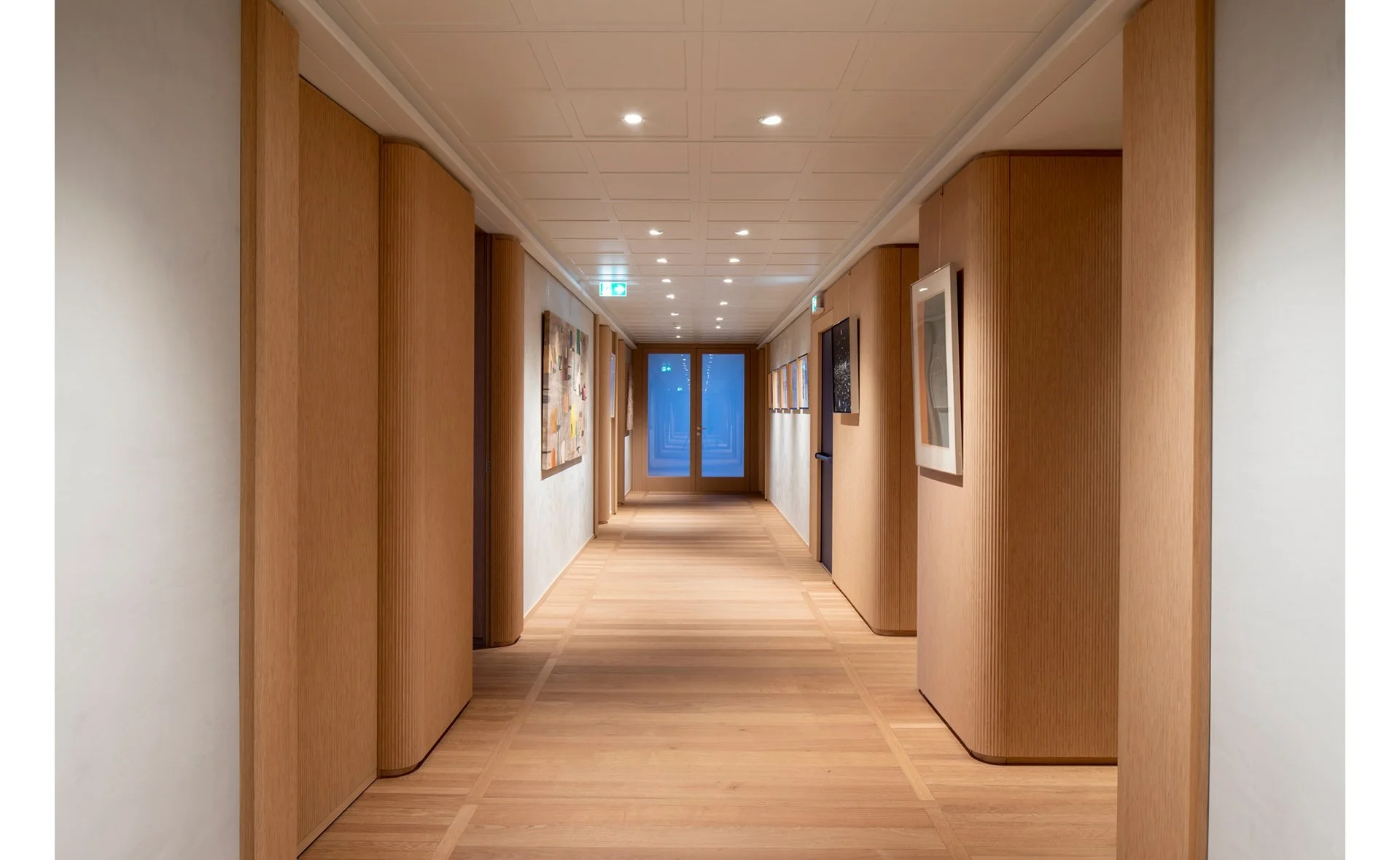
Bolton Group was undertaking a phased refurbishment of its headquarters in Milan, with the aim of creating a more contemporary, flexible and healthier workplace.
Biofilico was asked to support the project as an external advisor, working alongside the real estate project manager, HR team and design consultants.
This was a broad healthy workplace advisory assignment rather than a narrow interiors or certification role.
the advisory remit included:
evaluating wall finishes, flooring, furniture, ceiling panels and other interior elements;
reviewing sustainability and non-toxic healthy material considerations;
creating a biophilia plan for each floor;
supporting indoor landscaping supplier briefings;
integrating acoustics, lighting, indoor air quality, active design and mental wellbeing into a draft workplace wellness standard;
preparing a certification options matrix for executive review;
supporting internal communications around workplace wellness and sustainable office design.
A green + healthy office framework
The work was structured around the idea of a green and healthy office: a workplace that reduces environmental impact while actively supporting employee wellbeing.
The project strategy linked two related agendas framed around categories including wellness spaces, lighting, acoustics, biophilic design, active design, eco materials, green operations, mental wellbeing and air quality.
Physical and mental wellbeing
Better indoor environmental quality
Biophilic design and nature connection
Active design and healthier daily behaviours
Light, acoustics, air and comfort
Lower-impact products and materials
Circular economy thinking
Recyclable and eco-conscious materials
Greener operations
Responsible procurement
Healthy materials & sustainable specifications
Biofilico reviewed technical information for categories such as:
flooring;
wood flooring;
lacquer;
paint;
floor tiles;
acoustic products;
wall panels;
furniture;
ceiling panels;
doors.
building material certifications
The technical review considered environmental and health-related product information, including certifications such as FSC, Greenguard Gold, EPDs, recycled content, low-VOC performance and other sustainability markers.
A later furniture and finishes review looked specifically at certification frameworks for commercial furniture and materials, including FSC, EPD, Cradle to Cradle, Declare, HPD and BIFMA Level.
biophilia strategy
workplace biophilia
The project also included a dedicated biophilia strategy for the refurbished workplace.
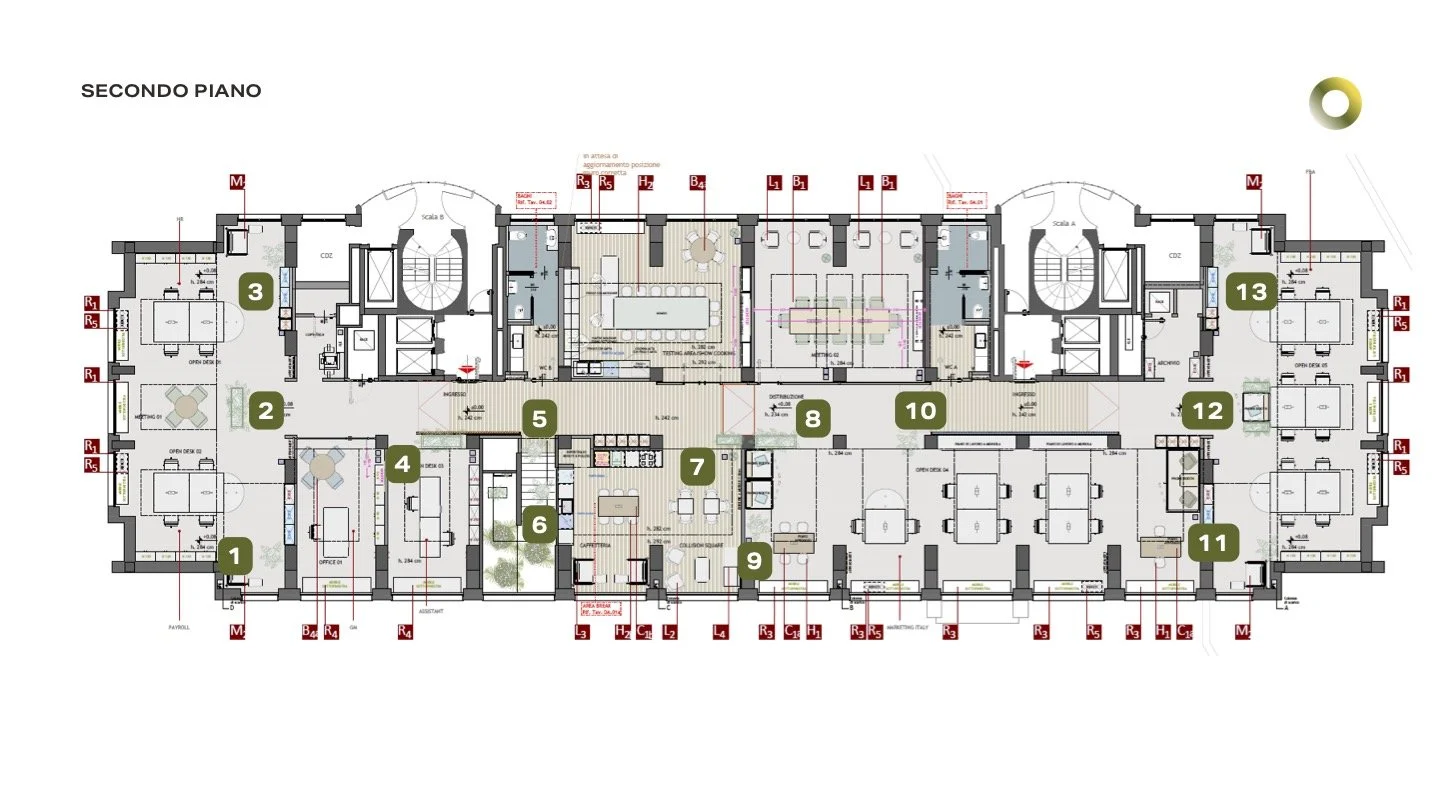
we identified where biophilic interventions could be introduced across the building, including:
stair and lift landings;
welcome walls;
open desk areas;
private offices;
meeting rooms;
collision / refreshment areas;
show kitchen areas;
bathrooms.
biophilia plan
The biophilia work included floor-by-floor mapping, indicating where plants, natural references and visual connection to nature could be integrated into the workplace plan.
A further plant strategy report developed detailed floor plans for the first four floors, identifying proposed plant locations, container types, plant heights, privacy objectives and decorative roles.
This turned biophilia from a general design aspiration into a practical implementation plan.
Indoor Environmental Quality: air, light & acoustics
Indoor air quality
The IAQ advisory work included recommendations around:
air quality testing;
monitoring of particulate matter, VOCs and CO2;
ventilation design;
refurbishment pollution management;
smoking restrictions;
entryway walk-off systems;
cleaning and filtration;
IAQ monitors and dashboards.
One recommendation was to use professional IAQ monitoring to make office air quality visible and actionable, rather than relying only on occasional testing.
Lighting
The work also considered lighting from a wellbeing perspective, including daylight access, glare, task lighting, high colour rendering and circadian lighting design principles.
Acoustics
The advisory scope included acoustic mapping, background noise, speech privacy, acoustic separation, sound-absorbing materials and impact-noise-reducing flooring.
These IEQ workstreams helped the client understand that workplace wellbeing is shaped by multiple overlapping systems, not only by visible design elements.
Certification strategy: WELL, LEED, RESET Air & Fitwel
healthy workplace certification
Bolton was considering whether to align the Milan HQ refurbishment with a healthy building certification scheme.
we prepared a certification options review covering relevant schemes including WELL, LEED Operations + Maintenance, RESET Air and Fitwel. we compared certification categories, process timelines, costs, difficulty and perceived value.
The comparison identified Fitwel as a relatively practical route for the Milan workplace, while WELL was positioned as more demanding, with higher perceived value but a more intensive process.
This work helped Bolton evaluate whether to pursue formal certification or use the standards as a design and operational benchmark without certification.
Fitwel scorecard and gap analysis
As part of the certification advisory work, we developed a Fitwel strategy matrix for the Via Pirelli workplace.
The draft scorecard identified current points, possible points and a gap-to-target strategy.
The scorecard was not simply a points exercise. It translated the certification framework into a practical action plan, assigning responsibilities across real estate, HR, facilities and internal communications.
Workplace wellness as a cross-departmental issue
stakeholder engagement
One of the important aspects of the Bolton project was that the work involved multiple internal stakeholders.
Healthy workplace strategy could not sit only with the architect or designer. It required coordination between:
real estate;
HR;
facilities management;
internal communications;
health and safety;
design consultants;
external suppliers.
For example, some recommendations related to physical design, such as stair visibility, entryway systems, biophilic planting and acoustic improvements.
Others related to policy and operations, such as smoking policies, green cleaning, occupant surveys, IAQ testing, healthy food and beverage policies, commuter surveys and health programming.
This is where healthy building advisory becomes more strategic than interior design alone. The goal is to help the client translate standards into decisions, responsibilities and future implementation pathways.
healthy office themes
Healthy materials
Biofilico reviewed finishes, flooring, furniture and other interior products through a sustainability and non-toxic materials lens. This included analysis of documentation such as FSC, Greenguard, EPD, Cradle to Cradle, Declare, HPD and low-VOC claims.
Biophilic design
The work identified where natural elements, planting and nature-inspired design could be integrated across the workplace, including corridor zones, meeting spaces, work areas and social areas.
Indoor air quality
The strategy considered testing, continuous monitoring, filtration, VOCs, particulate matter, CO2 and communication of IAQ results to occupants.
Active design
Recommendations included stair activation, sit-stand workstations, active commuting, movement-supportive policies and potential future outdoor or wellness amenities.
Workplace operations
The work considered cleaning, water quality, healthy food, emergency preparedness, stakeholder engagement and occupant satisfaction surveys as part of the broader health strategy.
Certification alignment
The project explored whether WELL, LEED, RESET Air or Fitwel could provide the most appropriate structure for the Milan HQ.
project outcomes
a blueprint for workplace wellness design
The Bolton project gave the client a structured framework for improving the health and sustainability profile of its Milan headquarters over time, and indeed other offices within the group.
Rather than treating wellness as a single design feature, the advisory work connected materials, indoor environmental quality, biophilia, certification, HR policy and facilities operations into a more integrated workplace strategy.
The project also created a potential blueprint for a broader workplace wellness standard that could guide future offices within the company.
Why this matters
Many workplace refurbishments now carry general ambitions around sustainability, wellbeing and ESG. The challenge is converting those ambitions into practical choices.
A healthy workplace advisory role helps answer questions such as:
Which materials are genuinely healthier or more sustainable?
Which product certifications are meaningful?
Which indoor air quality indicators should be measured?
Which workplace policies support employee wellbeing?
Which certification framework is proportionate for the project?
Which decisions belong to design, HR, facilities or real estate?
How can healthy building standards be used even without formal certification?
The Bolton Group headquarters project shows how these questions can be addressed during a live corporate refurbishment.
If you are planning an office retrofit, workplace refurbishment or new build and want a materially disciplined approach to healthy interiors, durable specification, and local procurement strategy, contact Biofilico to discuss how this framework can be adapted to your project constraints.