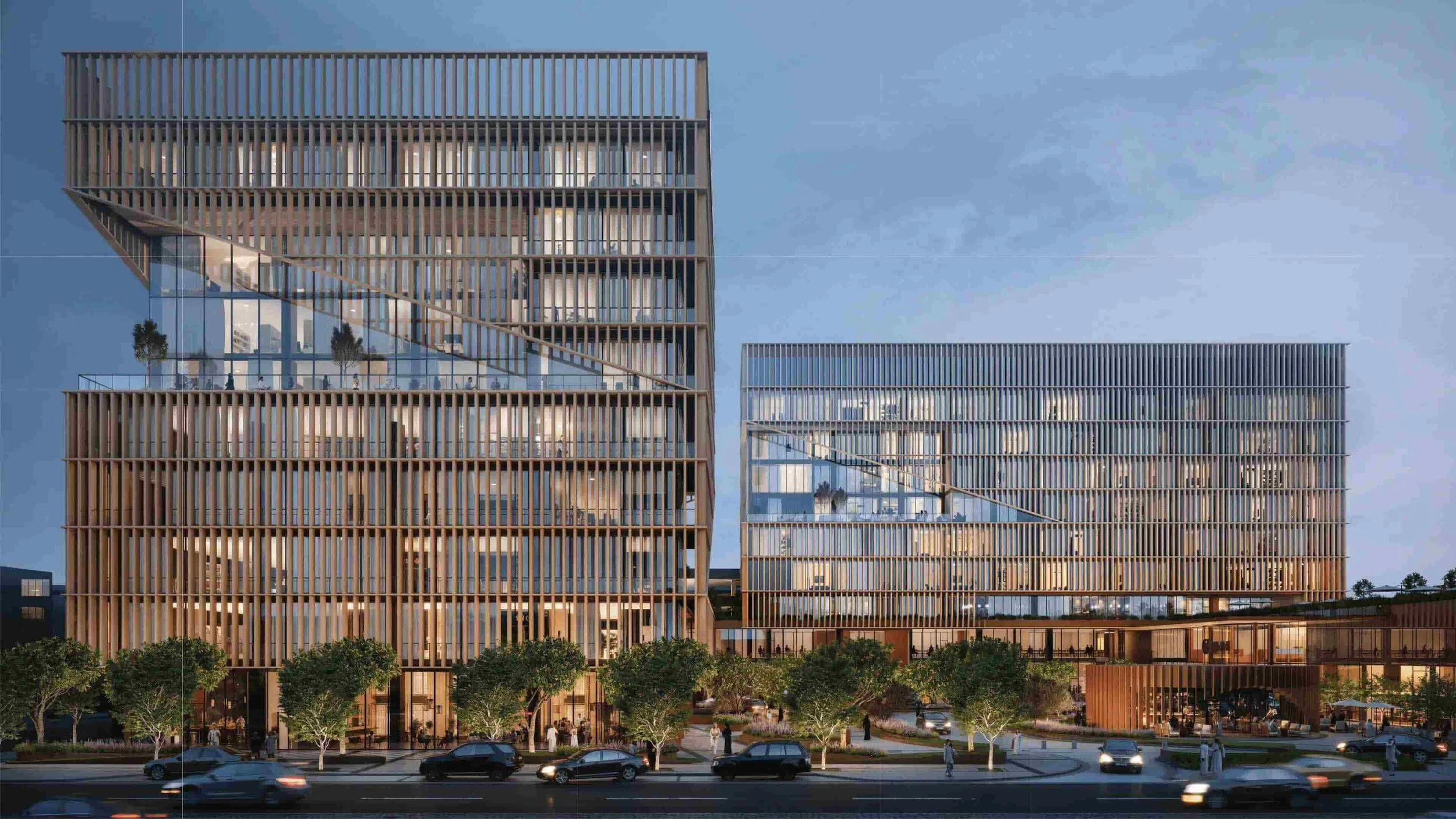
Conrad Hilton Wellness Club, Saudi Arabia
Interior concept for a social wellness club combining movement, spa, recovery and a membership community
SummaryBiofilico was appointed to help shape the concept for a wellness club developed for Refad Real Estate within a Conrad Hilton hotel project in Saudi Arabia, creating a premium environment where movement, recovery and wellbeing could become a more integral part of the guest experience.
Rather than treating the gym and spa as isolated hotel facilities, the ambition was to develop a more joined-up wellness hospitality concept: one that could support fitness, restorative treatments, thermal experiences and broader wellbeing rituals within a luxury hotel setting.
This project is a strong example of our approach in hospitality: defining how active and restorative amenities contribute to the overall identity, value and guest experience of a hotel, rather than being viewed as secondary support functions.
project overview
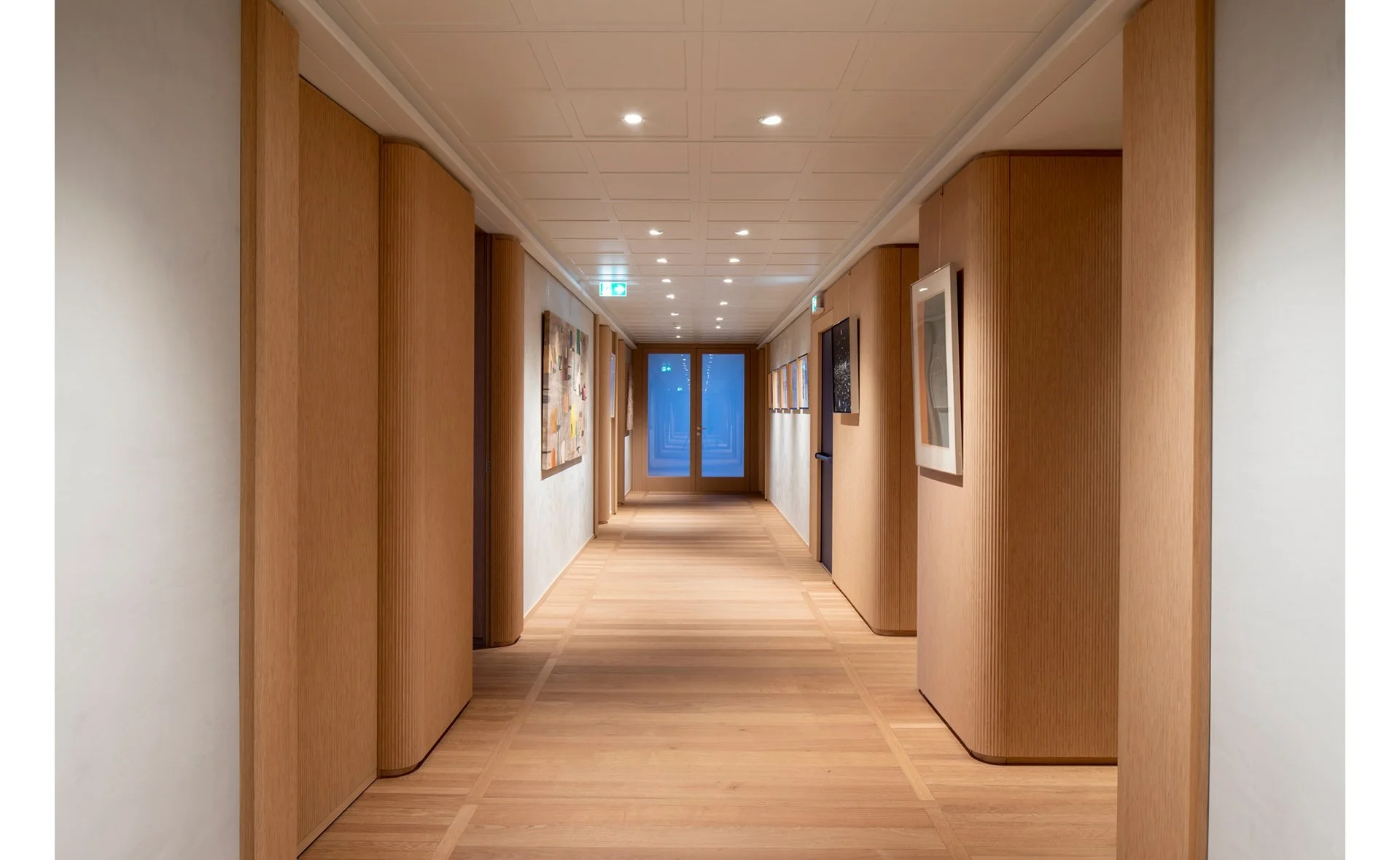
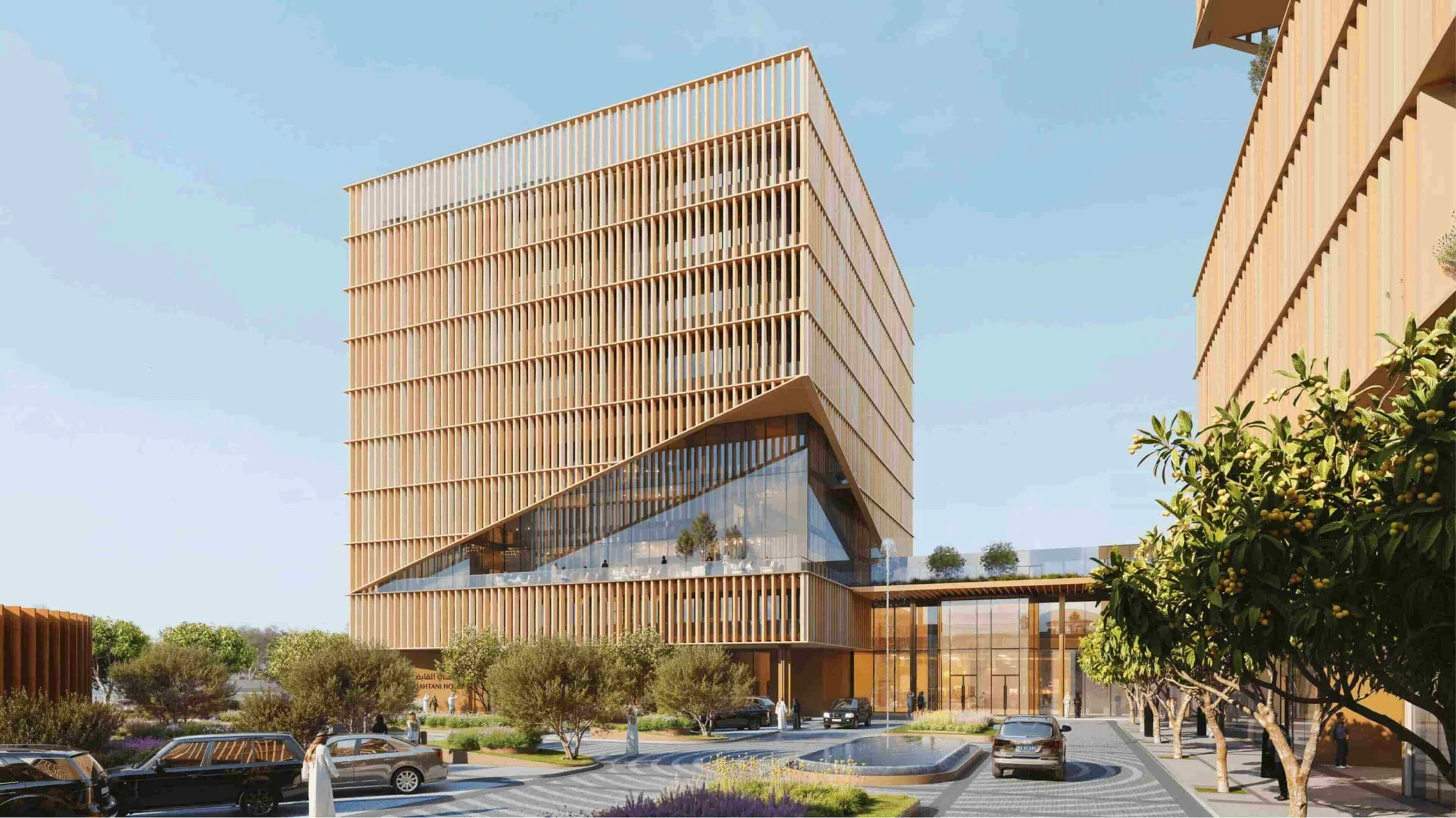
Project overview
Client: REFAD (developer), Conrad Hilton (operator) wellness club project
Location: Saudi Arabia
Sector: Wellness hospitality / luxury hotel / hotel wellness club
Project type: Wellness club concept and schematic planning
Scope: Wellness concept development, hospitality-led spatial planning, fitness and recovery amenity integration, premium wellness positioning
Key spaces: Gym, recovery areas, treatment spaces, sauna and cold-plunge experiences, changing and transition zones
the brief
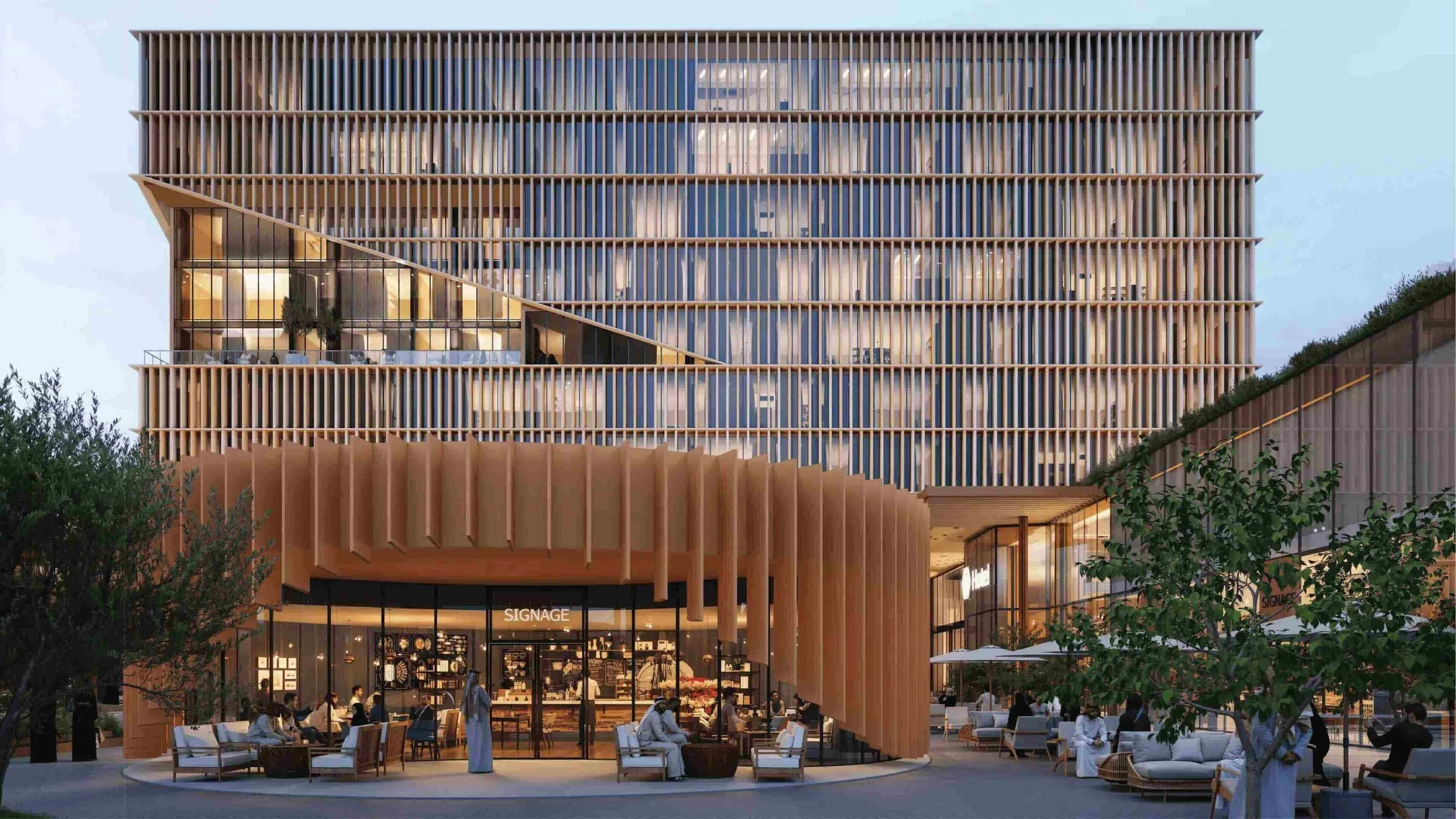
The brief
The project brief was to define a wellness club concept within a luxury hotel environment, with a premium offer that could serve both hospitality expectations and broader wellness ambitions.
The challenge was not simply to create a hotel gym or a basic spa support zone. The opportunity was to shape a more distinctive wellness destination within the hotel: one capable of combining movement, recovery and relaxation in a way that felt commercially relevant, culturally appropriate and aligned with the standards of an international luxury brand.
This required careful attention to:
guest experience and positioning
the relationship between fitness and recovery
hospitality-grade atmosphere and materials
culturally responsive planning and zoning
the balance between active and restorative uses
our design strategy
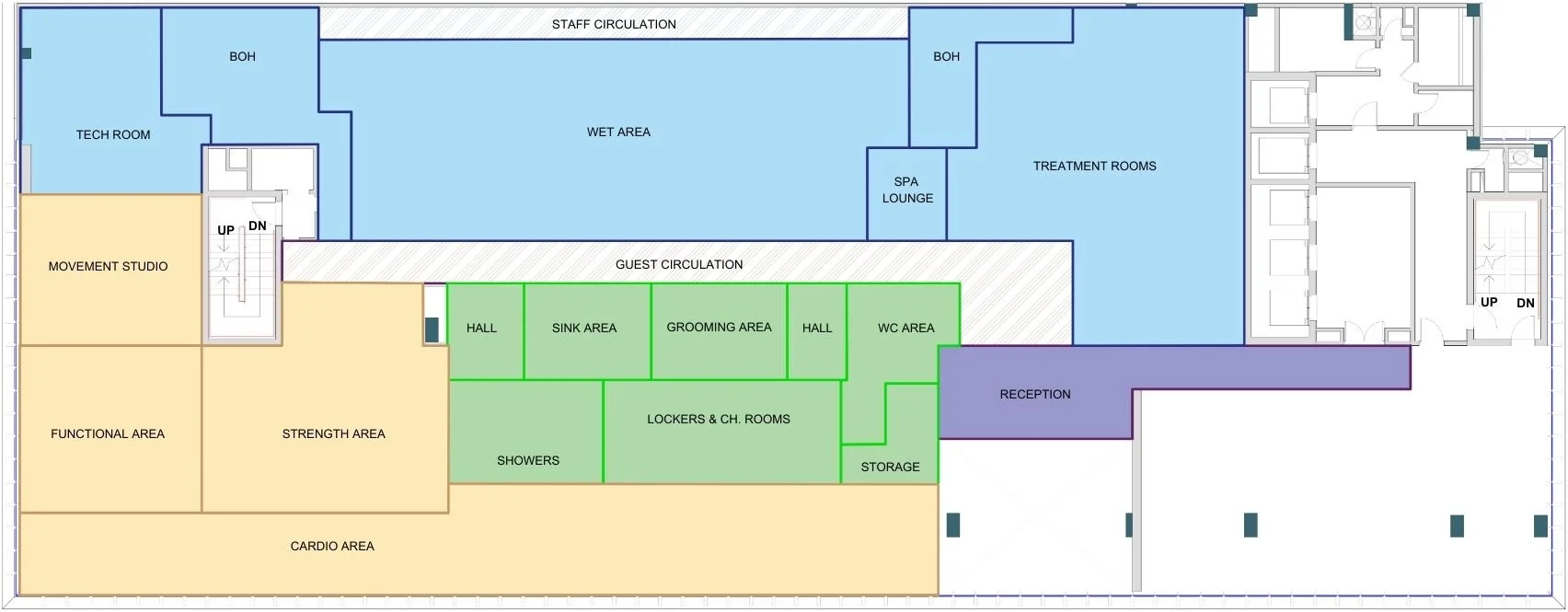
We approached the project as a wellness hospitality concept, not just a fitness brief.
The work was guided by four main principles:
1. Treat wellness as part of the hotel identity
The club needed to feel integrated into the wider hospitality vision rather than reading as a technical afterthought yet at the same time, it is open to the public and aiming to attract local residents.
2. Balance energy and restoration
The concept brought together movement-based spaces and recovery-oriented spaces so the club could support a broader wellbeing journey.
3. Create a premium but approachable atmosphere
The environment needed to feel elevated and luxurious, while still remaining usable and intuitive for guests.
4. Respond to local context
Planning and zoning had to acknowledge the cultural and operational realities of the Saudi market while still delivering an internationally credible wellness experience.
wellness vision
Wellness vision
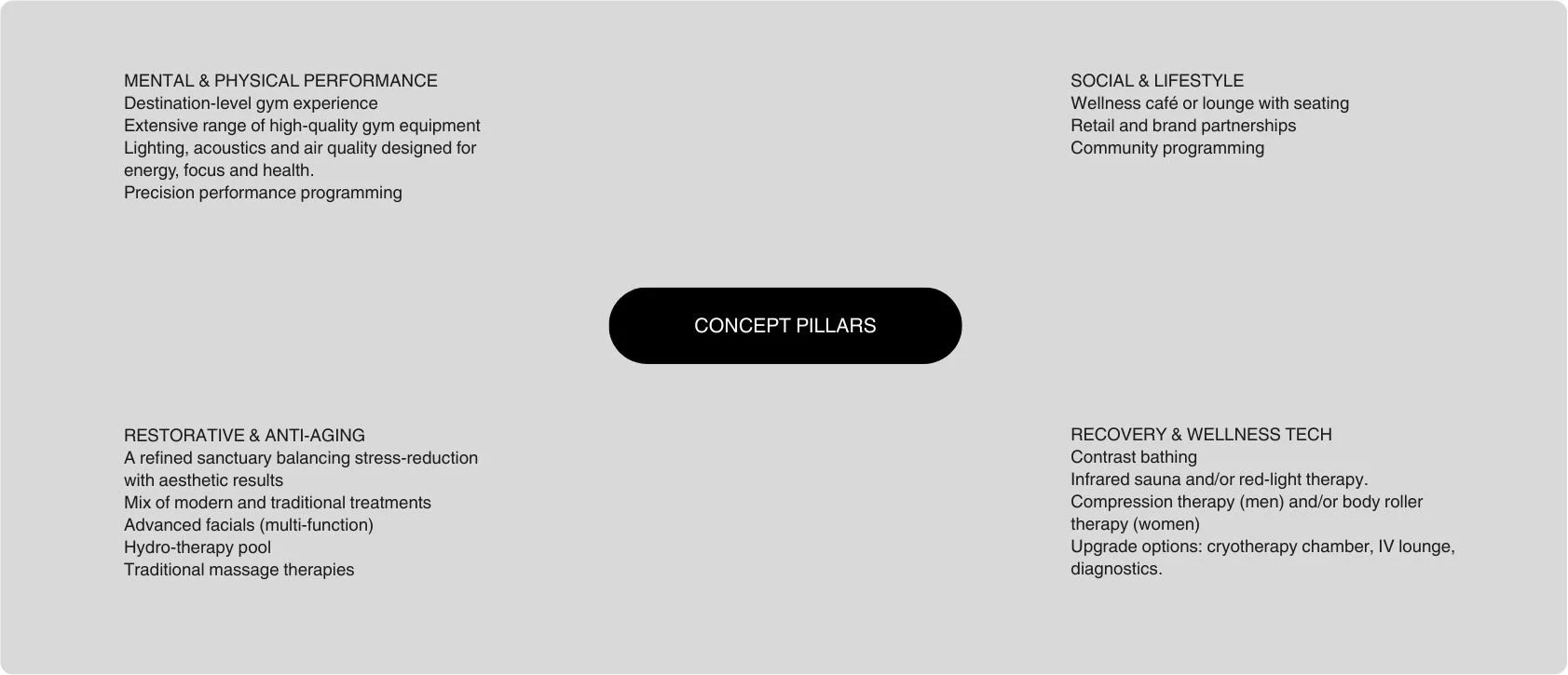
The core vision for the Conrad wellness club was to create a hospitality-led wellbeing environment that supports more than exercise alone.
That meant integrating:
physical training
recovery and downregulation
thermal experiences
private or quieter wellbeing moments
the comfort, clarity and polish expected in a luxury hotel environment
The club was conceived as a place where guests could move between more active and more restorative states in a seamless way, rather than using disconnected facilities with no broader experiential logic.
guest journey
Spatial planning
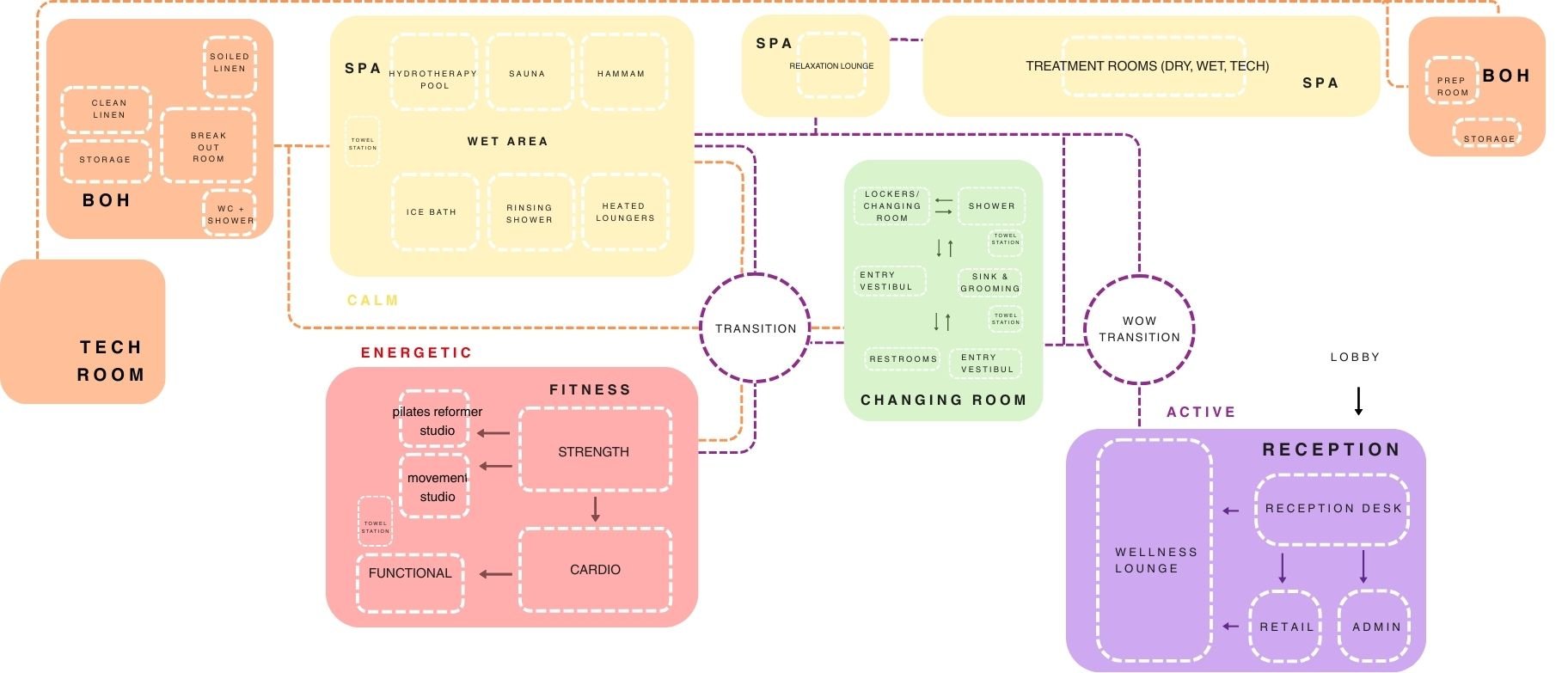
A major part of the project was the sequencing of the wellness experience.
The concept brought together a series of complementary spaces so that guests could progress naturally between:
arrival and orientation
changing and transition
movement and fitness
thermal and hydrothermal recovery
treatment or quieter restorative moments
post-exercise reset and relaxation
This kind of spatial planning matters in hospitality because the perceived quality of a wellness club often depends as much on flow, privacy and atmosphere as on the facilities themselves.
wellness amenity design
Wellness amenity design
Within the broader hotel concept, Biofilico integrated a range of key wellness amenities designed to support both guest wellbeing and the hotel’s premium positioning.
These included:
a main fitness space
recovery and thermal facilities
treatment-oriented wellness components
changing and transition areas
quieter zones for pause, reset and restoration
These elements matter not as isolated technical spaces but as the infrastructure that makes the hotel’s wellness promise tangible and commercially meaningful.
The movement spaces support performance, routine and daily wellbeing.
The recovery spaces help slow the pace, extend dwell time and create a more memorable hospitality experience.
Together, they allow the club to operate as part of a larger luxury wellness narrative.
recovery concept
Hospitality-led recovery concept
A defining part of the project was the emphasis on recovery as part of the luxury hotel experience.
Rather than positioning recovery as an optional extra, the concept treated restorative spaces as a central part of how guests would engage with the club.
This is increasingly important in hospitality, where wellness expectations now extend beyond basic fitness provision toward more complete experiences involving heat, cold, relaxation and nervous-system reset.
This also helped the concept feel more aligned with the evolving overlap between luxury hospitality, wellness travel and performance-led self-care.
cultural context
Cultural and contextual response
An important dimension of the project was its location in Saudi Arabia.
The planning approach needed to reflect not only the standards of an international luxury hotel brand, but also the cultural context of the local market.
That required sensitivity in how different zones were organised, how privacy and transition were handled (e.g. vestibules), and how the overall wellness journey was structured.
This contextual layer is part of what makes the project relevant to Biofilico. It shows that wellness hospitality design is not only about aesthetics or amenities, but also about how the concept is adapted to place.
project outcome
Why this project matters
The Conrad Hilton wellness club is a strong Biofilico case study because it shows how wellness amenities can be integrated into a wider luxury hospitality vision.
It demonstrates the value of thinking beyond the standard hotel gym-and-spa formula and instead shaping a more coherent guest wellbeing experience through:
stronger planning of active and restorative zones
a more premium and hospitality-led atmosphere
better integration of fitness and recovery
contextual response to market and culture
a clearer wellness identity within the hotel offer
In that sense, this is not simply an amenity design project. It is a hospitality wellness concept with broader brand and guest-experience implications.
Outcome
The Conrad wellness club concept established a more ambitious direction for hotel-based wellness in this project, positioning the club as an integral part of the guest experience rather than a peripheral facility.
By bringing together movement, recovery and hospitality-led design thinking, the concept created the basis for a more distinctive and commercially relevant wellness offer within the hotel.
For us, it is an important example of how wellness amenity design can support a broader hospitality strategy when treated as part of the overall guest journey.
Frequently Asked Questions
-
It was a wellness club concept within a Conrad Hilton hotel project in Saudi Arabia, combining movement, recovery and hospitality-led wellbeing. The developer is Refad.
-
No. The concept was broader than a gym, bringing together fitness, recovery and wellness spaces as part of a wider hotel guest experience.
-
It shows how we work on the wider wellness hospitality vision, including the active and restorative amenities that make that vision real.
-
The concept included fitness, recovery, thermal and changing-related wellness spaces within one integrated club environment.
-
The project aimed to move beyond the standard hotel gym-and-spa model by creating a more joined-up and premium wellness journey for guests and local residents, making this into a members club in its own right.