Environmental Performance in Hydrothermal Wellness Design
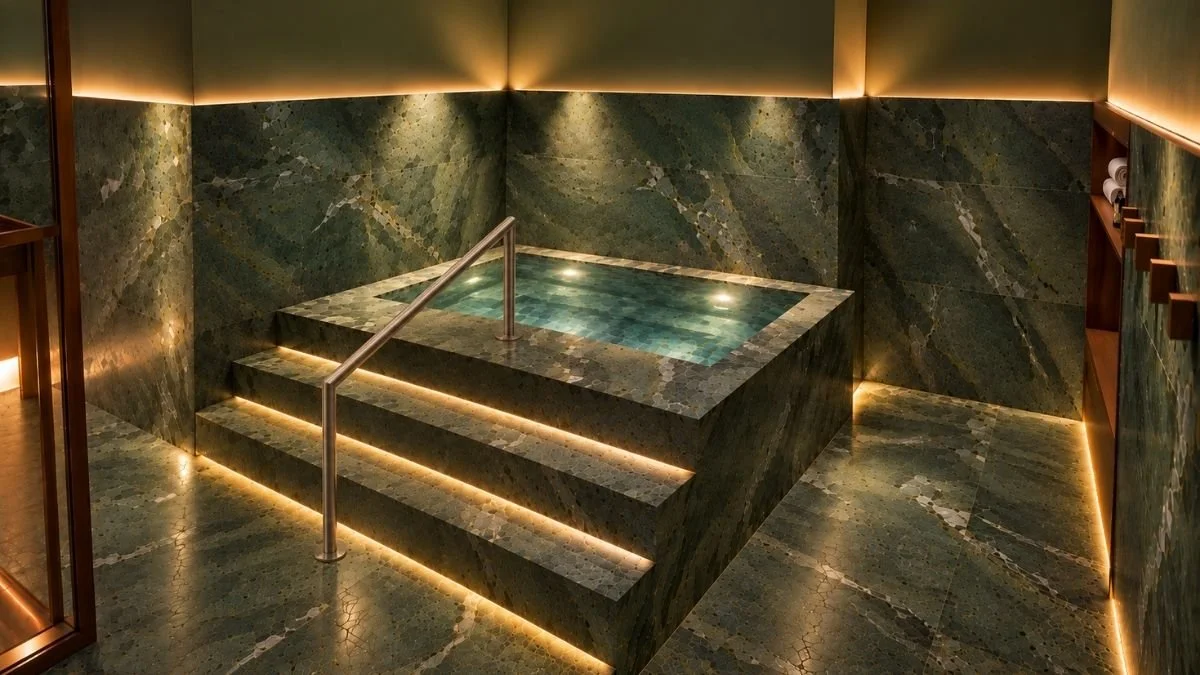
The contemporary bathhouse presents an interesting challenge for healthy-building design. These facilities are developed specifically to support wellbeing, bringing together heat, water, relaxation and sensory experiences within carefully designed interiors. Yet the environmental conditions required to deliver those experiences can be considerably more demanding than those encountered in conventional residential, workplace or hospitality environments.
High humidity, substantial temperature differences, intensive water use and complex ventilation requirements are inherent to many hydrothermal facilities. Materials are exposed to moisture and repeated cleaning, while pools, steam rooms and specialist equipment introduce additional requirements around water treatment, hygiene and maintenance.
The relationship between wellness and environmental quality is therefore more complicated than the presence of facilities intended to promote relaxation or recovery might suggest. A building can provide an appealing wellness experience without necessarily demonstrating strong performance across indoor air quality, water management, material selection or operational standards.
For architects, interior designers and developers, the contemporary bathhouse offers a useful opportunity to examine how healthy-building principles can be integrated into specialist wellness environments, and what role certification frameworks might play in that process.
Environmental quality in hydrothermal environments
Indoor environmental quality is a central consideration in healthy-building design, typically encompassing factors such as air quality, thermal conditions, lighting and acoustics. In hydrothermal environments, these parameters become more difficult to manage because different spaces are intentionally designed to create markedly different sensory and environmental conditions.
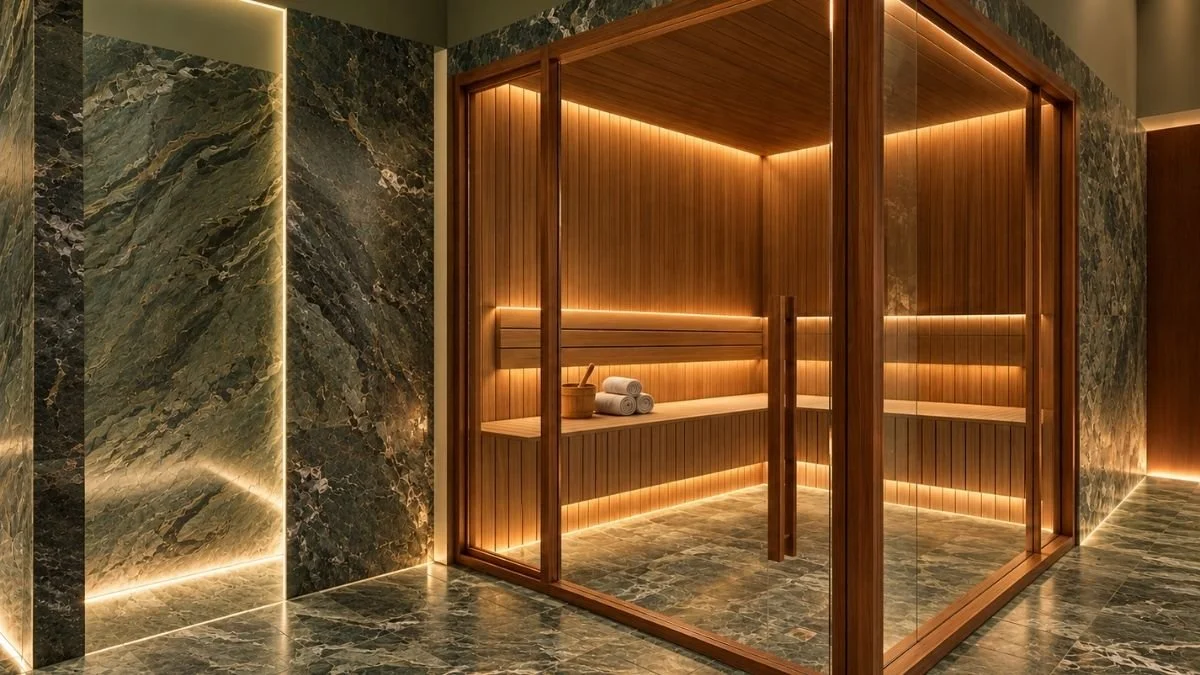
A sauna, steam room, heated pool and relaxation lounge may be located within the same facility, yet each requires a different approach to temperature, humidity and ventilation. The transitions between these environments form part of the intended guest experience, while the building systems must simultaneously manage moisture, maintain appropriate air quality and protect the surrounding construction.
Humidity management is particularly important. Steam rooms and pool environments introduce substantial moisture loads, which require appropriate ventilation, vapour control, waterproofing and material specifications. Inadequate management can contribute to condensation, deterioration of finishes and conditions that encourage microbial growth.
Air quality also requires careful consideration. Indoor pools may generate airborne disinfection by-products, including chloramines, depending on water chemistry, bather activity and operating conditions. Effective water treatment and ventilation are therefore closely related, and neither can be considered independently of the other.
The design challenge is to maintain appropriate environmental conditions without compromising the character of the bathing experience. A relaxation lounge should provide a comfortable, restorative environment, while a steam room is intentionally designed around elevated temperature and humidity. Applying a single environmental specification across the entire facility would overlook these fundamental differences.
A more appropriate approach is to establish performance objectives for each functional zone, recognising the specific requirements of the activities taking place within it.
Materials, acoustics and sensory experience
Material selection is another area where the relationship between wellness design and environmental performance becomes particularly important.
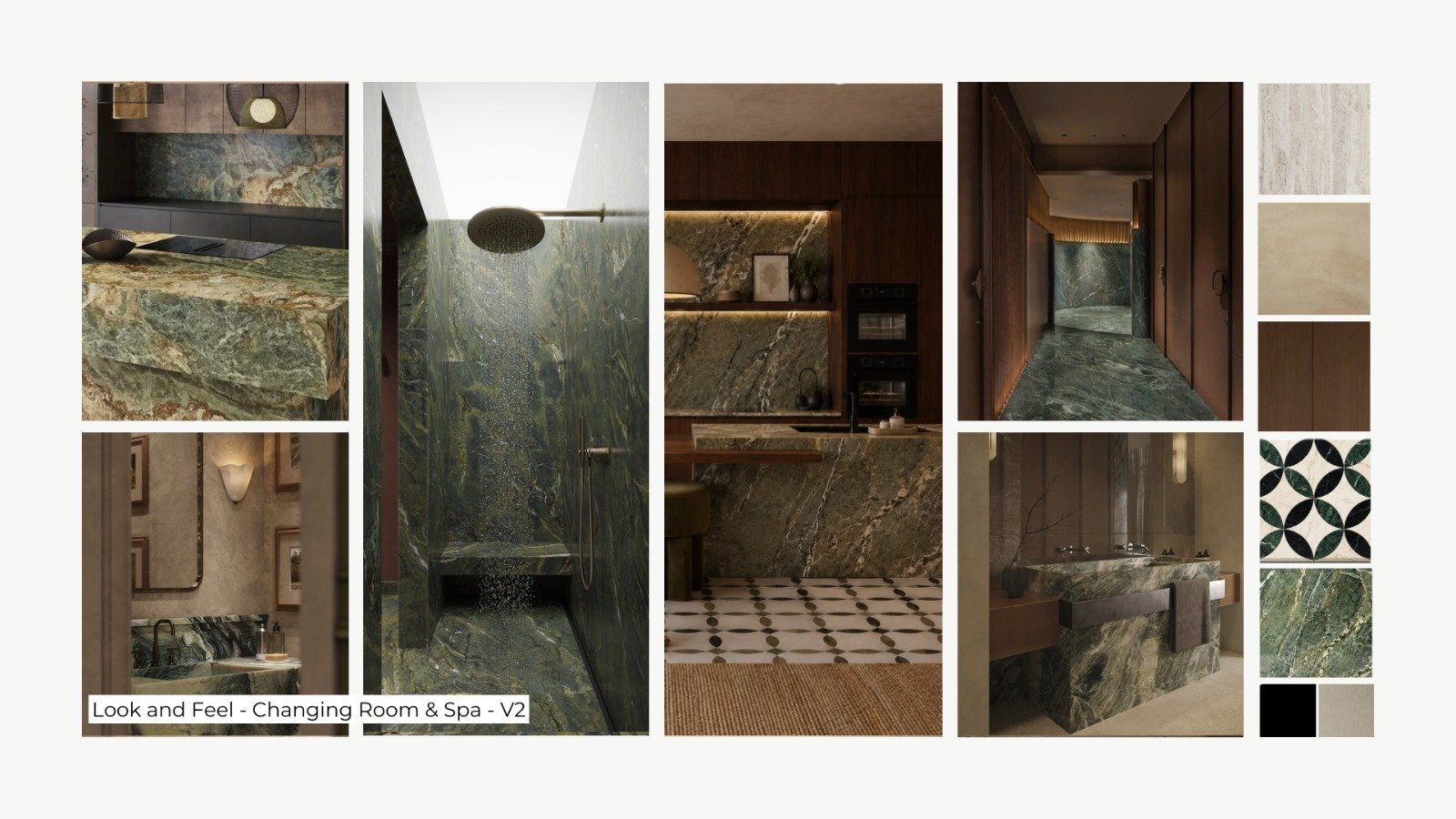
Hydrothermal interiors frequently incorporate stone, ceramic, timber, specialist coatings and other materials selected for their appearance, durability and suitability for wet environments. These decisions influence the visual character of the space, but they also affect maintenance, hygiene, moisture resistance and indoor air quality.
Finishes, adhesives, sealants and composite products should be evaluated for their emissions characteristics alongside their technical suitability. In areas subject to regular cleaning and disinfection, compatibility with maintenance procedures is equally important.
The selection of natural materials is often associated with biophilic design, although the presence of timber or stone does not automatically establish that an interior is healthy or environmentally responsible. Their performance depends on sourcing, treatment, installation, durability and the conditions in which they are used.
Acoustics can present another challenge. Hard, moisture-resistant surfaces are common in bathing environments, but these can contribute to excessive reverberation, particularly around communal pools and circulation spaces. The resulting acoustic conditions may conflict with the intended atmosphere of relaxation or contemplation.
Acoustic design therefore needs to consider the balance between durability, cleanability and sound absorption, potentially using spatial separation and carefully selected materials to manage noise without introducing inappropriate finishes into wet environments.
Lighting requires a similarly differentiated approach. Bathhouses often rely on subdued illumination, indirect lighting and carefully controlled visual transitions to establish a restorative atmosphere. These design choices can support the intended experience, but they also need to accommodate safe circulation, cleaning, maintenance and the practical requirements of different activities.
Circadian considerations may be relevant in areas where visitors or staff spend extended periods, although the role of lighting will vary according to the function and duration of use. A brief bathing experience does not necessarily require the same lighting strategy as a workplace or residential environment.
The objective is to develop a coherent sensory experience while maintaining appropriate environmental and operational standards.
Applying healthy-building certification frameworks
Healthy-building certification offers one way to introduce greater structure and accountability into these design decisions.
Frameworks such as WELL and RESET provide different approaches to evaluating aspects of building performance, although their scope, assessment methods and applicability vary. WELL addresses a broad range of health-related considerations across the built environment, while RESET offers modular standards focused on measurable aspects of building performance, including indoor air quality.
For specialist hydrothermal facilities, the first question is not necessarily which certification should be pursued, but whether the proposed framework is appropriate for the building type, project scope and operating model.
A conventional workplace, for example, has relatively predictable patterns of occupancy and environmental requirements. A bathhouse combines spaces with intentionally different thermal conditions, fluctuating occupancy, specialist water systems and operational procedures that may be fundamental to maintaining environmental quality. These characteristics require careful interpretation when considering certification criteria, measurement locations, performance thresholds and the boundaries of the assessment.
Indoor air quality monitoring may be useful in occupied relaxation spaces, reception areas and other environments where conventional performance criteria can be meaningfully applied. Steam rooms, saunas and pool environments require more specific consideration because their intended operating conditions may differ substantially from those assumed by general building-performance standards.
Similarly, certification requirements relating to thermal comfort need to be evaluated in the context of deliberately heated or cooled environments. Thermal exposure is part of the experience in these spaces, but this does not remove the need for appropriate safety procedures, environmental controls and operational oversight.
Water quality, cleaning procedures, material specifications and maintenance practices may also fall within the wider healthy-building strategy, even where particular aspects are not directly assessed by the chosen certification.
It is therefore important to distinguish between the scope of a certification framework and the broader responsibilities of the project team. Neither WELL nor RESET replaces specialist pool engineering, water hygiene management, building regulations or the technical standards applicable to hydrothermal equipment. Certification can provide useful performance objectives and independent verification, but it should operate alongside the specialist design and operational requirements of the facility.
Designing for performance beyond handover
One of the limitations of evaluating wellness interiors primarily through architectural design is that environmental performance depends on how the building is operated after completion. A hydrothermal facility may be designed with appropriate ventilation capacity, high-quality finishes and carefully considered environmental controls, yet its actual performance will be influenced by occupancy, cleaning procedures, maintenance, water treatment and the operation of building services. This makes the relationship between design and operations particularly important.
Ventilation systems need to respond to changing conditions, while water-treatment equipment requires appropriate monitoring and maintenance. Materials and finishes must withstand repeated use and cleaning without premature deterioration. Staff need clear procedures for identifying and responding to environmental or hygiene-related issues.
Where environmental monitoring is incorporated, the resulting data should support operational decisions rather than simply serve as evidence for certification. For example, monitoring temperature, humidity and selected air-quality parameters can help operators identify patterns that may require investigation or adjustment. The usefulness of this information depends on appropriate sensor selection, positioning, calibration and interpretation, as well as the ability of the operating team to respond.
This approach also introduces a distinction between design intent and verified performance. Architectural specifications establish what a facility is intended to deliver, while commissioning, testing and ongoing monitoring provide evidence of how it performs in practice.
For developers pursuing healthy-building certification, this distinction is particularly relevant. The certification strategy should be considered early enough to influence design decisions, but it must also account for the responsibilities and resources required during operation. A credible healthy-building approach therefore extends beyond the completion of the interior fit-out.
Integrating wellness experience and building performance
The contemporary bathhouse demonstrates why wellness design should not be assessed solely through the experiences or technologies offered to visitors. The quality of the environment itself is equally important. Air quality, water management, acoustics, lighting, materials and thermal conditions all influence the experience, while the building’s technical systems and operational procedures determine whether those conditions can be maintained consistently.
These considerations are particularly significant in hydrothermal environments, where the intended sensory experience places unusual demands on the building. For architects and developers, integrating healthy-building principles at an early stage can help establish clearer performance objectives, inform material and systems selection, and identify potential conflicts between the desired experience and the technical requirements of the facility.
Certification frameworks may provide a useful structure for this process, particularly where independent verification and measurable environmental performance are priorities. Their application should nevertheless be informed by the specific characteristics of the project rather than treated as a standardised exercise.
The broader objective is to create wellness environments in which the architectural experience, indoor environmental quality and operational performance are developed together. In a contemporary bathhouse, these elements are closely interconnected, and the quality of the completed facility depends on their successful integration.
Biofilico provides wellness interior design and healthy-building advisory services for hospitality, residential, workplace and specialist wellness environments.
Our work integrates interior architecture, environmental quality, biophilic design and operational considerations to create spaces that support the experience and wellbeing of their occupants.
CONTACT US HERE TO DISCUSS YOUR PROJECT
This article was written by Matt Morley, founder of Biofilico and a TEDx speaker.