What Makes a Wellness-Led Branded Residence Different from a Standard Luxury Apartment?
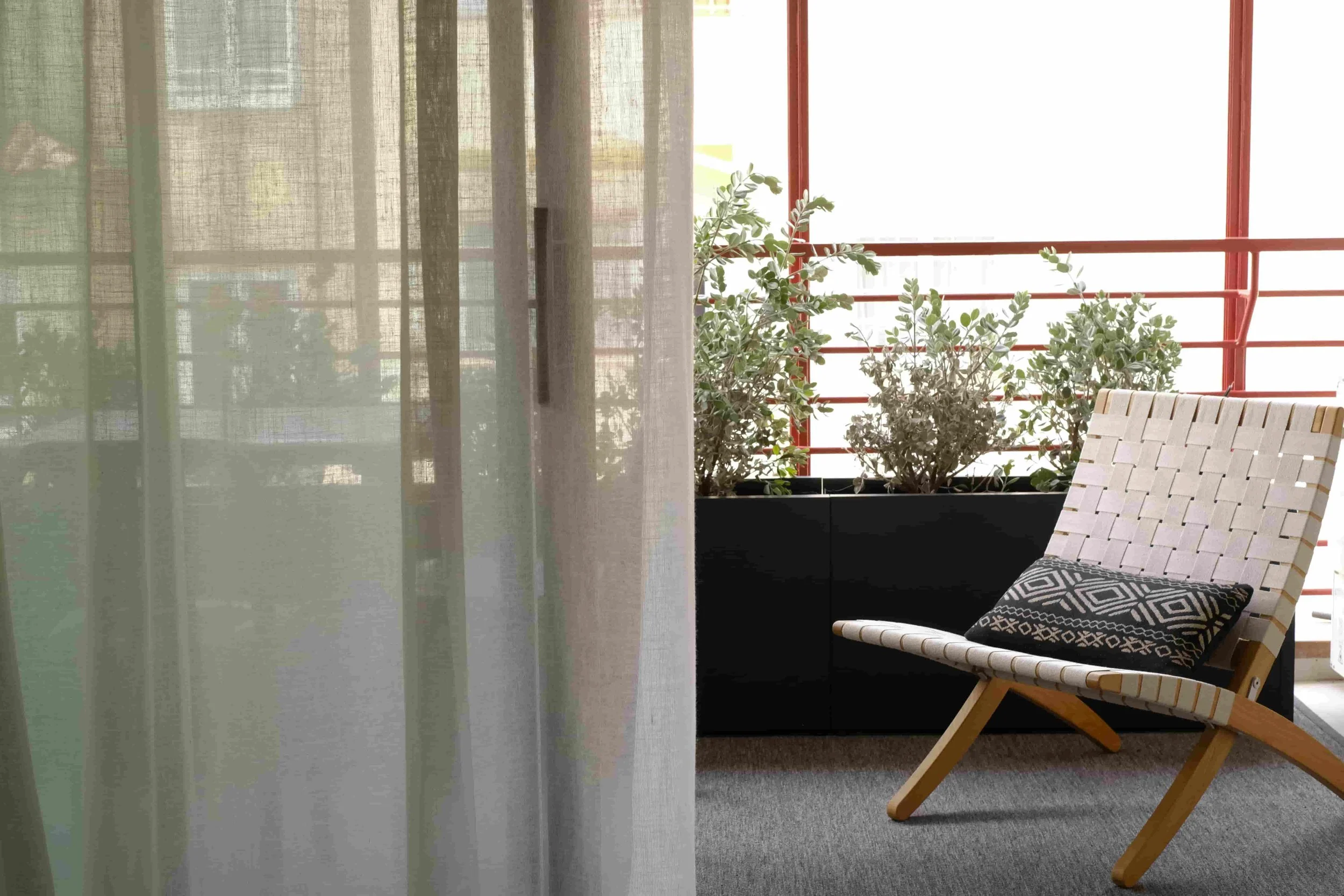
Casa Costa healthy home in Barcelona by Biofilico
Author: Matt Morley, WELL Advisor (2025 Movement + 2026 Mind categories) · Fitwel Ambassador
The branded residence market is no longer a niche. In 2025, the number of branded residences globally rose to 910, up from just 323 in 2015, with that figure expected to reach 1,747 by 2032. Nearly every major luxury hotel group now operates a residential programme. Non-hotel brands — from fashion houses to automotive marques to dedicated wellness operators — are entering the sector at pace. In 2025 alone, there were nearly 170 new launches, delivering around 25,000 new branded homes.
What's driving the demand is increasingly clear: people are looking for a home as a reflection of themselves, and a lifestyle experience. Wellness has moved to the centre of that lifestyle proposition.
But the word "wellness" is doing a lot of heavy lifting across developer marketing right now, and not all of it is earned. There's a meaningful difference between a luxury apartment that mentions wellness in its brochure and a residence that has been genuinely designed around the health and wellbeing of the people living in it. That difference matters commercially — and it matters even more to the buyers who increasingly know what to look for.
Why the branded residence format is particularly well-suited to wellness
The standard luxury apartment development has one design moment: the sale. The branded residence has an ongoing relationship with its residents — through services, programming, amenity management and brand touchpoints that continue long after keys are handed over. That ongoing relationship is what makes the wellness proposition in a branded residence structurally different from a standard development.
Buyers are now far more discerning, prioritising execution, service culture, amenity design and long-term operational credibility. In other words, the brand is the invitation, not the conclusion. A wellness brand attached to a residential development creates an expectation of delivery that a non-branded luxury developer doesn't face.
That expectation is a commercial pressure — but it's also an opportunity. Developers who can genuinely deliver on the wellness promise, through design quality rather than just marketing language, create a more defensible product in an increasingly crowded market.
The question for developers is no longer whether to include wellness in the brief. It's how to do it in a way that's credible, buildable and genuinely differentiated.
On our Fusion Students Brent Cross Town project in London, the amenity brief covered gym, wellness studio, basketball court and mindfulness room across a luxury co-living development — a model that increasingly mirrors what premium branded residential is now delivering."
The five design decisions that separate a wellness residence from a luxury apartment
A standard luxury apartment optimises for visual impact at the point of sale: the kitchen finish, the view, the ceiling height, the address. A wellness residence optimises for how the occupant feels in the space day to day — which requires a different set of design decisions, and a different brief.
Air quality is the single most impactful health variable in an interior environment and the one most systematically under-specified in residential development. It encompasses ventilation strategy, filtration specification, material selection and the management of VOC emissions from finishes, adhesives, flooring and furniture.
A residence designed with IAQ as a genuine priority will have mechanical ventilation with high-grade filtration, low-VOC specification across all interior finishes, and ideally continuous air quality monitoring visible to residents.
These decisions are made at the design and specification stage — they cannot be retrofitted meaningfully. In a branded residence context, IAQ is one of the clearest differentiators between a development that takes wellness seriously and one that uses the language without the substance.
2. Circadian and biodynamic lighting
Human health is profoundly affected by light — its colour temperature, intensity and timing across the day. A wellness-led residence treats lighting as a health intervention, not just an aesthetic one. Circadian lighting systems that shift from energising cooler tones in the morning to warmer, lower-intensity tones in the evening support sleep quality and hormonal regulation.
Maximising natural daylight through layout decisions, glazing specification and the positioning of living spaces relative to orientation is equally important. Blackout performance in bedrooms — the quality of window coverings, the elimination of light bleed — is a sleep design decision that most luxury apartment specifications still treat as a finishing detail.
3. Acoustic comfort
Noise is one of the most significant and least discussed stressors in residential environments. Acoustic performance between units, from external sources and within the apartment itself — particularly in open-plan layouts where hard surfaces dominate — directly affects sleep quality, cognitive function and perceived calm.
A wellness residence specifies acoustic performance as a health parameter, not just a construction code compliance. This means acoustic modelling at the design stage, careful selection of floor finishes and ceiling treatments, and attention to mechanical noise from HVAC systems, lifts and plant rooms.
The difference between a quiet, restorative home environment and a stressful one is often made entirely in acoustic decisions taken early in the design process.
4. Healthy materials specification
The materials going into a home — its flooring, wall coverings, finishes, furniture, adhesives and sealants — affect the air the occupants breathe, the chemicals they're exposed to, and their broader relationship with the interior environment.
A wellness-led materials specification prioritises low-VOC and low-emission products, avoids materials with persistent chemical additives, and where possible draws on natural, mineral and biobased alternatives that perform well over time without degrading air quality.
This is one of the areas where Biofilico spends a significant amount of advisory time on residential projects — the specification decisions that get made at tender stage often introduce unnecessary chemical load into interiors without the developer or design team being fully aware of it.
5. Movement-supportive spatial layout
A residence designed around movement doesn't need a private gym on every floor. It needs a spatial logic that encourages physical activity as part of daily life — generous ceiling heights, stair designs that invite use rather than discouraging it, amenity layouts that make the gym or movement studio the path of least resistance rather than a destination that requires effort to reach.
At the amenity floor level, this translates into a fitness and movement offer that goes beyond the hotel-gym-in-a-basement model: proper spatial proportions, natural light where possible, a considered equipment mix, and adjacency to recovery facilities — sauna, cold plunge, contrast therapy — that increasingly define the premium wellness amenity offer.
The amenity floor: where branded residences are redefining expectations
If the individual apartment is where private wellness happens, the amenity floor is where it becomes social and communal — and it's where the gap between a genuine wellness-led development and a standard luxury building is most visible.
Buyers are increasingly prioritising wellness features including fitness centres, wellness facilities and residence lounges as standard expectations rather than premium additions. The developments gaining traction in the Middle East, Mediterranean and major European cities are those that have invested in amenity floors that feel more like a private members' wellness club than a hotel basement gym.
This means a proper fitness space with enough ceiling height, natural light and spatial quality to support serious training. A recovery area with sauna, steam and cold water immersion. A movement studio for yoga, Pilates or programmed fitness classes. A mindfulness or meditation space — quiet, acoustically controlled, properly lit. Ideally, a social wellness component: a health-oriented lounge, juice bar or nutrition offering that creates a reason to use the amenity floor outside of exercise.
The programming layer matters as much as the physical space and the most credible branded residence developers are those who think about this from the brief stage, not after completion.
The commercial case for getting this right
The premium commanded by branded residences over comparable non-branded properties varies significantly by market and execution quality. Emerging cities command premiums of over 45% above non-branded properties, while resort destinations maintain around 34%. Within the branded segment, there is a further premium available to developments where the wellness proposition is genuinely delivered — not just marketed.
Experts say that with wellness and longevity becoming top of mind, firms in that field have the potential to outpace other luxury sectors in terms of both demand growth and price performance. The developments that will capture that premium most consistently are those where the wellness brief was set correctly at the start — where IAQ, materials, acoustic performance, lighting design and amenity strategy were treated as core design parameters rather than marketing overlays.
That's not a complex brief to set. But it does require a specialist perspective at the right point in the process — early enough to shape the decisions that can't be changed later.
What this means for the brief
For developers working on branded residence projects in Europe and the Middle East — whether hotel-affiliated or standalone wellness-branded — the design decisions that determine the credibility of the wellness proposition are overwhelmingly made before construction begins.
The IAQ strategy, the materials specification, the acoustic brief, the amenity mix, the lighting design approach: these are front-end decisions with long-term consequences.
At Biofilico, we work with residential developers, branded residence operators and design teams at exactly this stage — defining what a wellness-led brief actually means in practice, translating it into specific design and specification guidance, and ensuring the wellness narrative the development is built around is reflected in the design decisions that matter most to the people who will live there.
Matt Morley is the founder of Biofilico, a wellness interior design consultancy operating across Europe and the Middle East. He holds WELL Advisor credentials for the Movement and Mind chapters, plus he is a Fitwel Ambassador. Biofilico works with residential developers, branded residence operators and design teams on wellness interior design, healthy building strategy and amenity design.