Why Wellness Design Advisory Matters Early in the Process
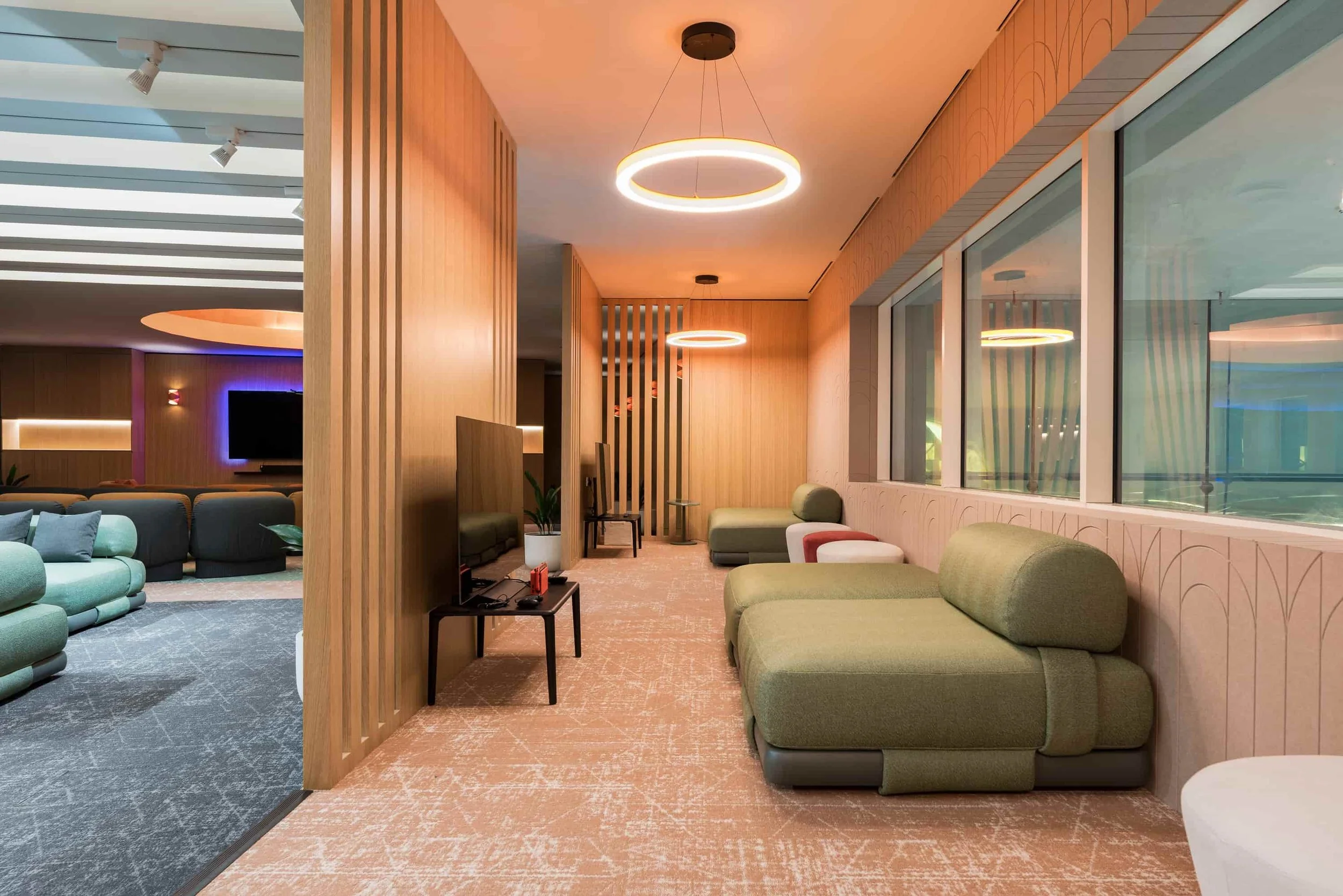
student lounge designed by Biofilico for Carnegie Mellon University Qatar
One of the most common misunderstandings in this field is that wellness design can simply be layered onto a project once the main planning and design decisions have already been made.
In reality, that is often the point at which the greatest opportunities have already been lost.
If a client wants to create a healthier, more wellbeing-led building or interior environment, the most important decisions are usually made early: during briefing, concept development, spatial planning and the first rounds of design thinking. By the time a project reaches later design stages, many of the key factors shaping user experience are already fixed or at least much harder to change.
This is why wellness design advisory is most valuable at the start of the process.
Rather than being treated as a decorative overlay, a specialist wellness perspective should help shape the logic of the real estate project from the outset. That includes how the space is planned, what the priorities are, which user needs matter most, what level of wellness ambition is realistic, and how design decisions can support health, comfort and daily usability in a practical way.
Wellness Is Not Something to Add at the End
In many projects, wellness is introduced too late.
A developer, hotel owner, university or employer may decide they want the scheme to feel healthier, more premium or more aligned with wellbeing. But by the time that ambition is articulated, the project may already be well advanced. Layouts may be largely set. Technical assumptions may be in place. The design team may be focused on finishes, coordination or procurement. At that stage, the conversation often shifts toward visible features rather than deeper design questions.
This is when wellness can become reduced to a short list of amenities or aesthetic gestures:
more planting
a better gym
a spa-like bathroom
natural materials in selected areas
softer branding language around wellbeing
These features may still have value, but they do not address the full potential of wellness design. More importantly, they often fail to engage with the underlying question of how the building or interior actually performs for the people using it.
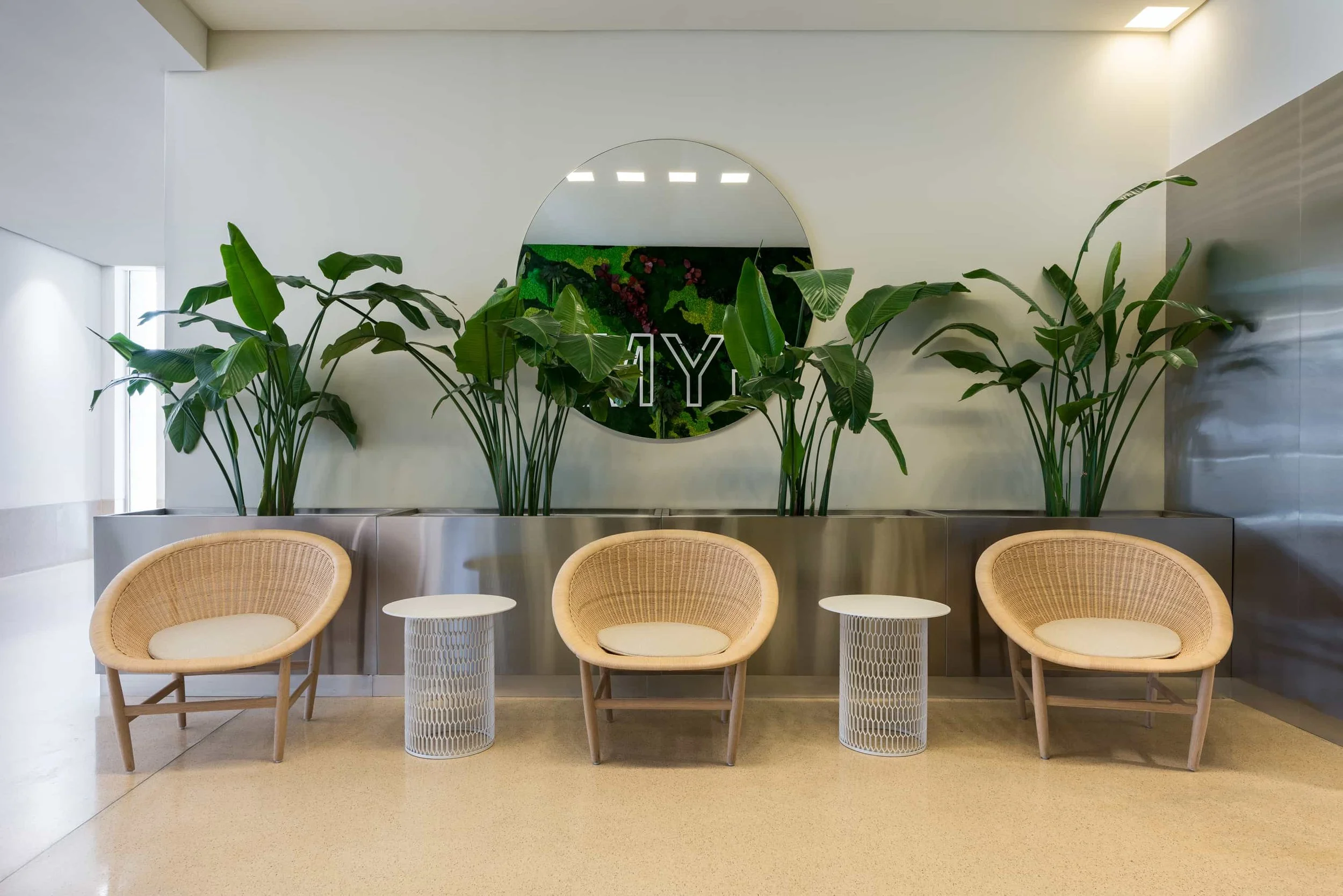
gym entrance ara by Biofilico for Carnegie Mellon University Qatar
The Earliest Decisions Are Often the Most Important
Many of the strongest determinants of wellbeing are shaped before a scheme reaches detailed design.
These include:
the brief itself
the layout and zoning logic
adjacency decisions
the allocation of square metres
the balance between social and quiet uses
the relationship between shared and private space
access to light
circulation quality
the role and purpose of amenities
the positioning of the project in the market
These are not superficial matters. They have a direct effect on how people experience the space every day.
A workplace that struggles with focus may be suffering from early zoning decisions rather than a lack of decorative wellness features. A residential scheme may underperform because apartment layouts, acoustic assumptions or shared amenity priorities were not challenged early enough. A university campus project may look impressive on paper but fail in daily use because the concept was not properly tested against real student and staff behaviour. A hotel may have an excellent spa, but if guestrooms, lighting and public spaces do not support rest and recovery, the wider wellness story will remain fragmented.
In all of these cases, earlier advisory would usually have been more valuable than later embellishment.
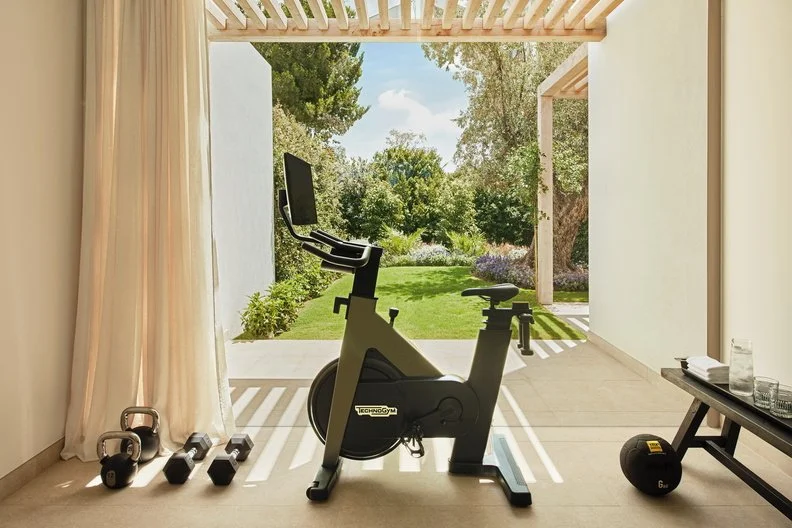
resort villa gym for Ikos Porto Petro Mallorca Spain
What Early Wellness Advisory Actually Involves
Wellness design advisory is not simply a matter of reviewing finishes or suggesting a few healthier materials. When brought in early, it can help shape the project at a much more strategic level.
That may include:
defining what wellness should mean for the specific asset or user group
identifying the design priorities most likely to improve experience and value
aligning stakeholders around a realistic wellness ambition
reviewing the brief through a health and wellbeing lens
improving spatial logic before it becomes fixed
stress-testing amenity ideas against actual use cases
identifying gaps between concept language and practical design outcomes
helping ensure wellness is integrated across the project, not isolated in one department or room
In other words, it is about helping the client move from a broad ambition to a more useful and deliverable design strategy.
Why Different Sectors Benefit from Early Input
The value of early wellness advisory is visible across multiple sectors, even though the specific priorities vary.
Residential and multi-family developments
In residential projects, early advisory can help shape apartment layouts, shared spaces, amenity planning, acoustic priorities, healthier material strategies and the overall resident offer. Once core planning decisions are locked in, it becomes far harder to improve the day-to-day living experience in meaningful ways.
Workplaces
In offices, early input can help define how the space should support focus, collaboration, privacy, decompression and staff wellbeing. It can also help prevent projects becoming too driven by image, density or generic open-plan assumptions.
University campuses
For universities, early advisory can strengthen the relationship between concept and actual use. Student lounges, study spaces, staff areas and mixed-use academic environments often perform best when wellbeing is addressed through functionality, zoning and practical user experience rather than later aesthetic adjustments.
Hotels and hospitality
In hospitality, early wellness thinking can connect guestroom design, public spaces, spa, movement, recovery and brand positioning into one coherent experience. If wellness is considered too late, it often gets confined to specialist amenities rather than informing the wider guest journey.
The Common Problem: Fragmentation
One reason early advisory is so important is that many projects are inherently fragmented.
A typical scheme may involve a developer, operator, architect, interior designer, technical consultants, procurement specialists, brand teams and contractors. Each party may be working toward a different set of priorities. Without a clear wellness lens introduced early enough, the original ambition can become diluted or translated inconsistently.
This is especially common in projects where wellness is seen as desirable, but not yet properly defined.
The result is often familiar: wellness appears in the narrative, but not in the deeper planning logic. The project sounds right, but does not fully work that way in practice.
Early advisory helps reduce this gap. It provides a more consistent reference point for how health, comfort and user experience should be interpreted across the process.
Wellness Advisory Helps Avoid Superficial Decisions
Another advantage of early strategic input is that it helps clients avoid spending money on the wrong things.
Without a clear framework, it is easy for projects to invest in visible wellness features that do little to improve daily experience. A token quiet room may add less value than better acoustic separation. A fashionable amenity may matter less than stronger zoning. A premium material in a lobby may matter less than better lighting and comfort in the core occupied spaces.
This does not mean amenities are unimportant. It means they should follow strategy, not replace it.
A more thoughtful advisory process helps clients decide where wellness investment will have the greatest impact.
The Real Role of the Consultant
In this context, the role of a wellness design consultant is not only to propose ideas. It is to help sharpen judgment.
That means helping clients ask better questions early on:
Who are the real users of this building?
What are they likely to need from the environment day to day?
Which design decisions will most strongly affect their comfort and wellbeing?
Where is the concept strong, and where is it superficial?
Which features are genuinely valuable, and which are mostly symbolic?
How should wellness be reflected in spatial planning, not just visual language?
These are the kinds of questions that improve outcomes before the project becomes too fixed.
Why This Matters Commercially
Early wellness advisory is not just a design issue. It is also commercially relevant.
For developers, it can help create stronger and more differentiated products.
For hotels, it can improve the coherence of the guest experience.
For universities, it can support better student and staff environments.
For employers and landlords, it can create healthier and more effective workplaces.
In each case, the aim is similar: to make the building more valuable by making it work better for the people using it.
That is why early advisory often delivers stronger return than late-stage enhancements. It influences the shape of the project, not just the finish.
Wellness Design Should Start With the Brief
If there is one principle that matters most, it is this: wellness design should begin with the brief.
It should not be added only when the moodboards are being assembled, or when someone decides the project needs a more wellness-led narrative. By then, the conversation is often too narrow.
A stronger approach is to ask from the beginning how the project should support health, comfort, performance, recovery and everyday quality of life, and to ensure those priorities are reflected in the core design logic.
That is where specialist advisory adds the most value.
Final Thoughts
Wellness design advisory matters early in the process because that is when the most important decisions are still open. Once layouts, priorities and assumptions are fixed, the role of wellness often becomes narrower and more cosmetic.
For clients who want to create healthier, more coherent and more valuable buildings, the opportunity is to integrate wellness thinking from the start. That means using it to shape the brief, the planning logic, the user experience and the overall design direction, rather than relying on visible features alone.
In practical terms, that is what turns wellness from a branding theme into a meaningful part of the project.
Starting a residential, workplace, campus or hospitality project?
Biofilico advises clients at the early stages of design to help shape healthier interiors, stronger wellness strategies and more coherent user-focused environments.
Explore our services or get in touch to discuss your project.
FAQ Section
What is wellness design advisory?
Wellness design advisory is specialist input that helps shape buildings and interior environments to better support health, comfort, wellbeing and daily usability. It often includes briefing, concept support, user-experience thinking and design review.
Why is wellness advisory most valuable early in a project?
Because the biggest decisions affecting user experience are usually made during briefing, concept design and early planning. Once those decisions are fixed, it becomes harder to improve the project in meaningful ways.
Can wellness design be added later in the process?
Some elements can be added later, such as certain amenities or finish changes, but the deeper opportunities around layout, zoning, user experience and overall coherence are usually strongest at the start.
Which types of projects benefit from early wellness advisory?
Residential developments, workplaces, universities, hotels and mixed-use projects can all benefit from early advisory, although the priorities vary by sector.
What problems can early wellness advisory help avoid?
It can help avoid superficial amenity decisions, poor spatial logic, fragmented stakeholder priorities, weak user experience and a gap between the project’s wellness narrative and how it actually performs.
What does a wellness design consultant do at the early stage?
A wellness design consultant helps define priorities, interpret the brief through a wellbeing lens, improve planning decisions, test ideas against real user needs and create a more coherent design strategy.